Meats and Sausages

Meat Cuts
Meat cuts can be divided into:
- Noble meat cuts.
- Less noble meat cuts.
Noble cuts are those cuts which are highly regarded by chefs as:
- They consist almost entirely of desirable lean meat.
- Are easy to prepare as they contain small amounts of bone.
- Contain outside fat which is easy to remove.
- Include little connective tissue.
- Are simple to cook.
They are highly regarded by a consumer as:
- They can be cooked using simple methods.
- Are tender when cooked.
- Taste good.
Noble cuts come from the parts of the animal that exercise less frequently such as beef round, rump, sirloin, loin or pork ham, loin and belly. Less noble cuts exhibit opposite characteristics and come from the parts of the animal that exercise frequently such as beef neck, chuck, shoulder, shin or pork shoulder, picnic and hocks. Such cuts contain many bones, smaller muscles and more connective tissue. As there is a finite number of noble parts the animal carries, the less noble and smaller parts are used for making sausages. This includes cuts and trimmings removed from the more noble cuts and parts such as liver, kidney, heart, tongue, jowls and skin. The only instance when noble meat cuts will be used for making sausages is the shortage of less noble cuts or a recipe such as for example ham sausage that calls specifically for lean ham.
There is a unique meat classification system in the USA:
- Acceptable grade - the only fresh pork sold in supermarkets.
- Utility grade - used in processed products and not available in supermarkets for purchase.
Short of being a farmer, a person living in a large city has little choice but to purchase meats in a local supermarket. Individuals who keep on winning whole hog barbecue contests purchase their pigs from selected farmers.
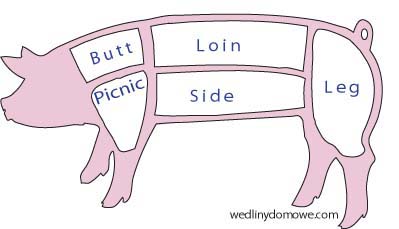
Pork meat is divided into five prime cuts:
- Shoulder butt (Boston butt).
- Shoulder picnic.
- Loin.
- Ham.
- Side (bacon, spare ribs).
Those main cuts are further broken down to additional parts. They all have unique names and numbers and they are listed in a trade catalog. These five primary cuts are the meat that a home sausage maker will be able to purchase in a supermarket. There are many meat products and known sausages that require meats from other parts of the hog’s body than those five primary cuts mentioned above. To make liver sausages you need liver, fat, meat from heads, brains, kidneys, hearts, back fat, lungs, tripes, etc. To make head cheese you need head meat, shank (hocks) and skins.
These parts are rich in collagen and will form a gelatin which will hold meat ingredients together. Blood is of course needed for blood sausages. Meat processors dealing with slaughter houses have access to those meats and they do use them to manufacture different sausages. A person living on a farm will be able to obtain a hog without much difficulty, a person living in a large city is facing some obstacles but can make substitutions.
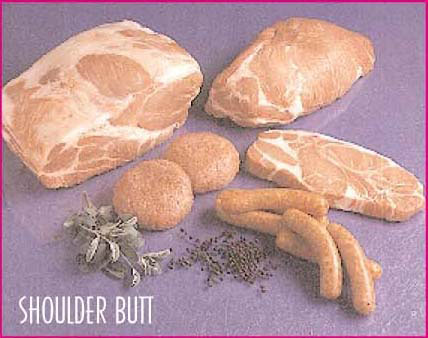
Boneless blade roast, ground pork, sausages
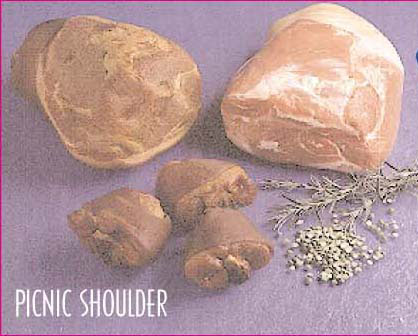
Smoked picnic, arm picnic roasts, smoked hocks
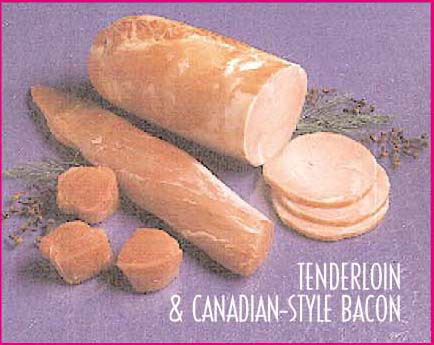
Smoked loin
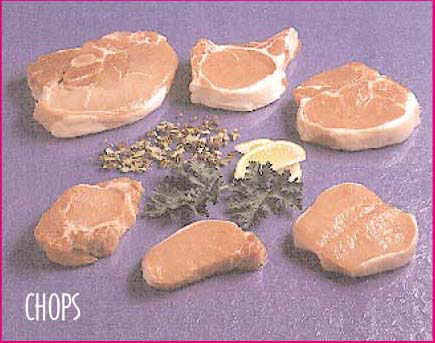
Pork chops, smoked chops
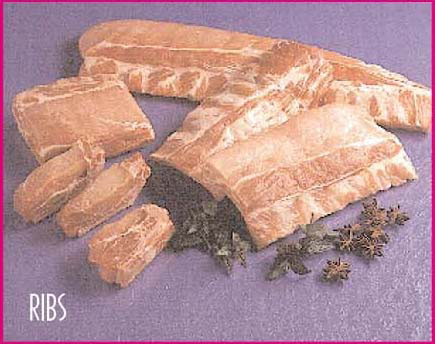
Ribs
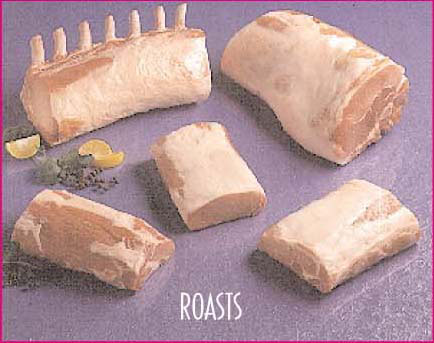
Roasts
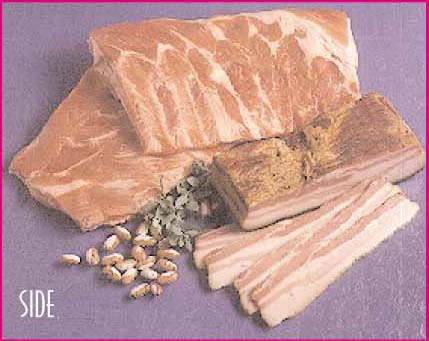
Spareribs, slab bacon, sliced bacon
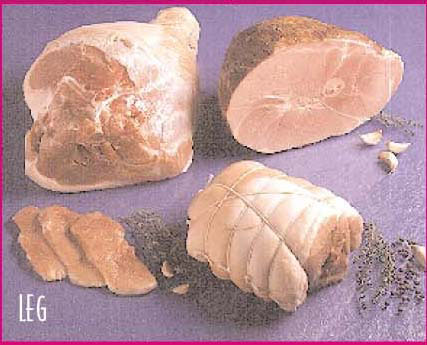
Bone-in fresh ham, smoked ham, ham roast, leg cutlets
These five primary cuts are the meat that a home sausagemaker will be able to purchase in a supermarket. There are many meat products and known sausages that require meats from other parts of the hog's body than those five primary cuts mentioned above. For instance making liverwurst you will need: liver, meat from heads, brains, kidneys, hearts, back fat, lungs, tripes etc. To make headcheese you need head meat, tongues, snouts and skins. Blood is needed for blood sausage. Meat processors dealing with slaughter houses have access to those meats and they do use them to manufacture different sausages. A person living on a farm will be able to obtain a hog without much difficulty, a person living in a large city is facing some obstacles. The best advice is to make friends with a local butcher.
There are seven USDA Beef Grades: Prime, Choice, Select, Standard, Commercial and Utility, Non-graded beef and Natural beef. In addition there thirteen major steak names and a number of beef roasts.