Meats and Sausages

Spanish Meats and Sausages
Embutidos
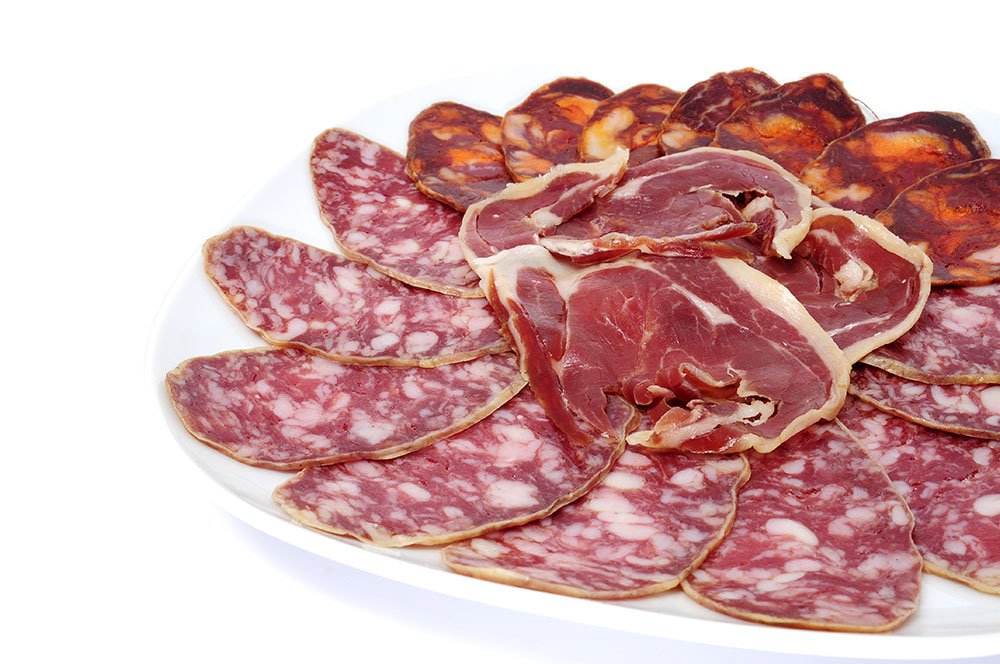
To have a better understanding of Spanish sausages, it is necessary to master the confusing definition of the embutido. Spanish verb “embutir” translates into “to stuff” or to fit. As all sausages are stuffed into a suitable casing, they are rightly called embutidos. Whole pork loins that are stuffed in casings are also known as embutido although loins are usually called lomo embuchado as “embuchar” is another name for stuffing minced meat. Fresh sausage, dry sausage, hot dog, mortadella, frankfurter, bratwurst, blood sausage, liver sausage, formed ham, smoked sausage – they all are embutidos. In short, if we see the word embutido, we can safely assume it is some kind of a Spanish sausage.
Embutidos
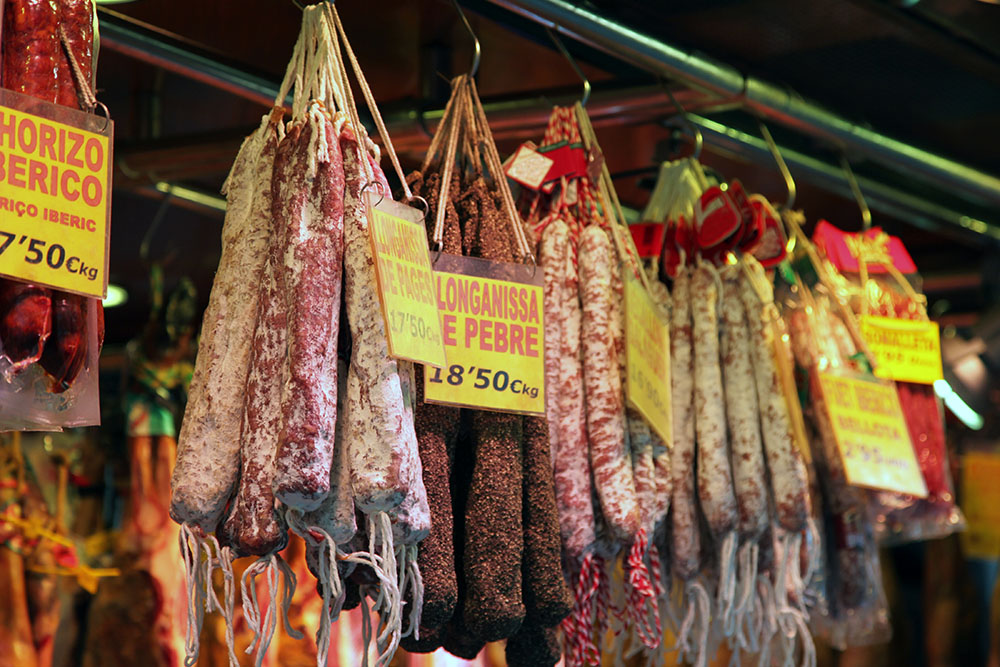
Embutidos
The following are most popular Spanish sausages.
Sausages Made with Meat
Chorizo
From Spanish Government Official Regulations (Boletín Oficial del Estado), BOE-A-1980-6080m, February 7, 1980, Section 2:
Chorizo is a mixture of comminuted pork, or pork and beef, pork fat, salt, pimentón, other spices, authorized flavorings and additives, stuffed into natural or artificial casings, submitted to sufficient drying and maturing, smoked or not, to obtain the characteristic red color (with the exception of white chorizos) and characteristic taste and flavor.
Chorizo must include pimentόn. When chorizo is made without pimentόn but conforms to all requirements for making chorizo it is called white chorizo (chorizo blanco).
General Characteristics
Chorizos exhibit a firm texture, cylindrical shape, more or less round, presented in different methods depending how they are linked (straight, tied in series with twine, U-shaped), generally looking rough on outside, the casing well adhered to the meat. When cut, the slices are clean with uniform texture holding its shape well, fat particles can be easily distinguished from lean. Chorizos exhibit characteristic color and flavor due to spices, flavorings and processing steps.
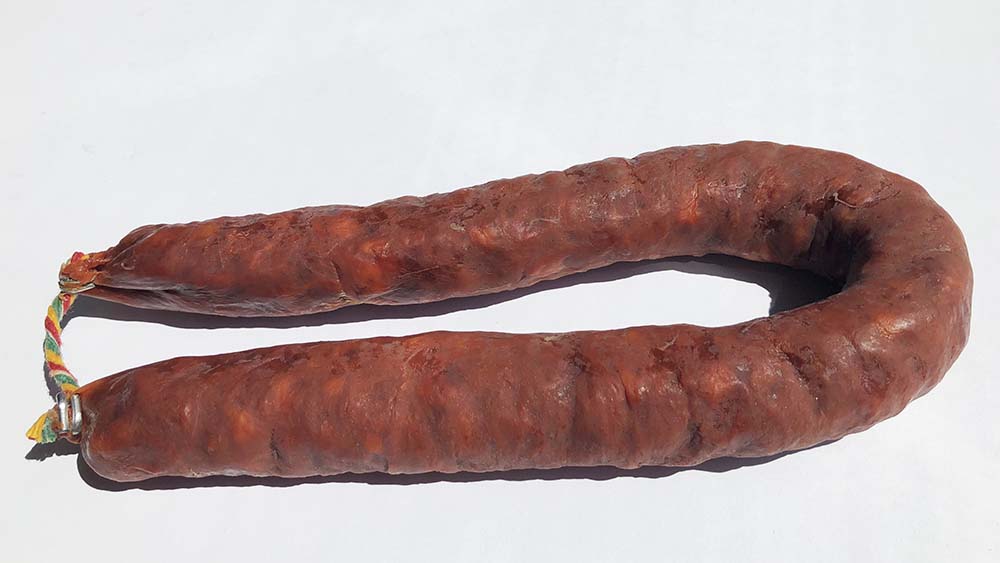
Chorizo
Ingredients
Ingredients commonly used are salt, pimentón, garlic, black or white pepper, nutmeg, oregano, powdered milk, sugar, curing salts.
Chorizo is the most popular Spanish fermented dry sausage. Chorizo is a small, intensely orange-red sausage which is cured (dried, but not cooked), and often cold smoked. Smoke is applied not for the flavor, but as a part of the drying process, usually to warm up the chamber when the temperature drops low.
Pimentón was brought to Spain by Christopher Columbus so chorizos made before 1493 did not include it and were light colored. In time pimentón has become the most important ingredient for making quality chorizos. Certain chorizo recipes require that only the best quality Pimentón de La Vera be used, for instance Chorizo de Cantipalos - "If it does not contain pimentón de La Vera it is not Chorizo de Cantipalos." Hot and sweet pimentón are often mixed together.
Originally, chorizo was made with lean pork, usually loin, however, today it is a coarsely ground sausage with a generous proportion of fat. There are exceptions, for instance in Chorizo de Pamplona the meat is finely ground. Chorizo de Pamplona and Chorizo de Soria in addition to pork also include beef.
Chorizo de Pamplona
From Spanish Government Official Regulations (Boletín Oficial del Estado), BOE-A-1980-6080m, February 7, 1980, Section 3:
Chorizo de Pamplona is a mixture of comminuted pork, or pork and beef, and pork fat ground through 3 mm plate, salt, pimentón, other spices, authorized flavorings and additives, stuffed into natural or artificial casings forming straight sections, submitted to sufficient drying and maturing with smoke; the fully cured sausage must have a diameter of 40 mm or more, the surface slightly grainy and the slices should display easily visible grain-of-rice sizes of pink fat, the sausage having characteristic taste and flavor.
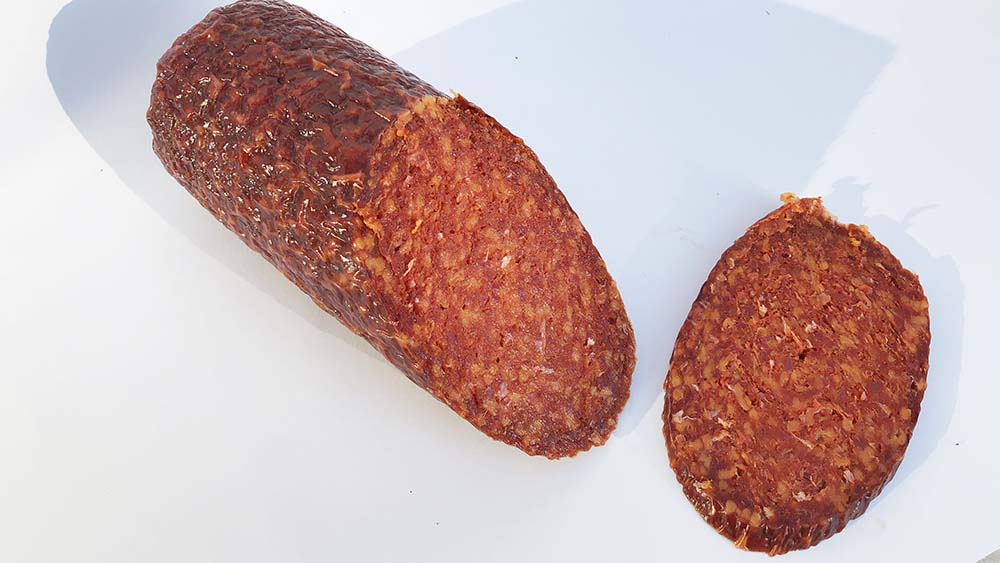
Chorizo de Pamplona is easy to recognize due to its finely comminuted meat. It looks almost like salami, however, it is made with pimentón so its color and taste are different.
Chorizo de Cerdo Ibérico (Chorizo made with Iberian pig meat)
From Spanish Government Official Regulations (Boletín Oficial del Estado), BOE-A-1980-6080m, February 7, 1980, Section 5:
Chorizo de Cerdo Ibérico is a mixture of comminuted meat and fat that must come from Iberian pig only, salt, pimentón, other spices, authorized flavorings and additives, stuffed into natural or artificial casings, submitted to sufficient drying and maturing, with or without smoke, to obtain the characteristic red color and characteristic taste and flavor.
Iberian meat is what separates this chorizo from others and to enforce conformity to official regulations meat inspectors have the right to inspect production facilities of any factory that produces this sausage.
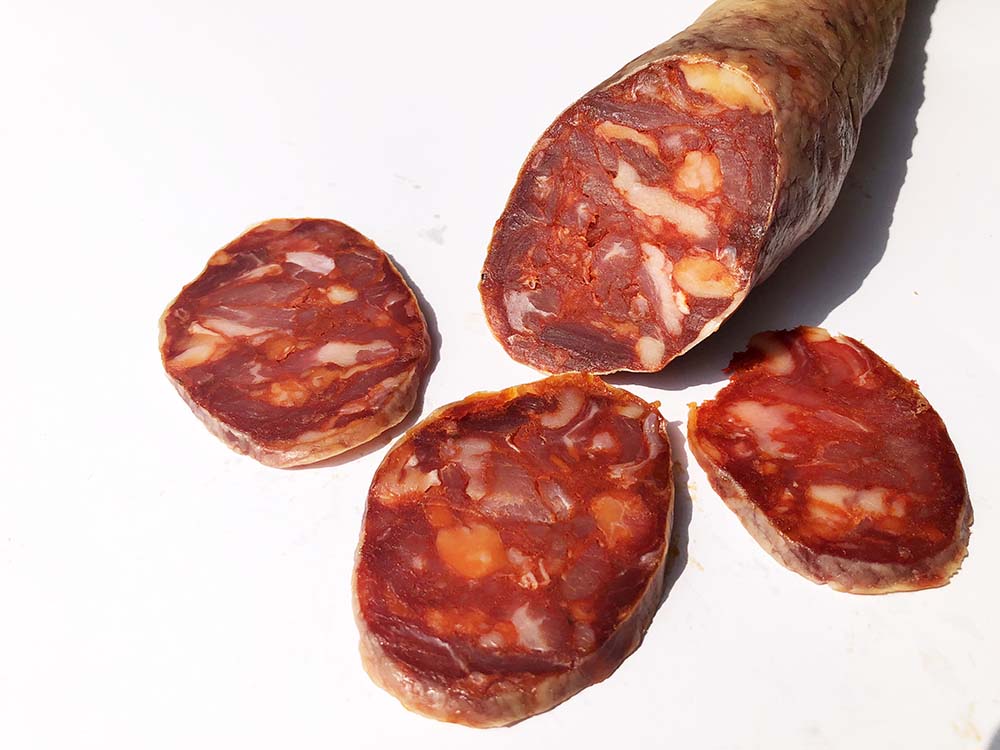
Chorizo Iberico.
This classic, dry chorizo originates in the municipality of Cantipalos in the province of Segovia in Castilla and León, Spain. From 2011 Chorizo de Cantipalos carries protective geographical indication certificate (PGI).
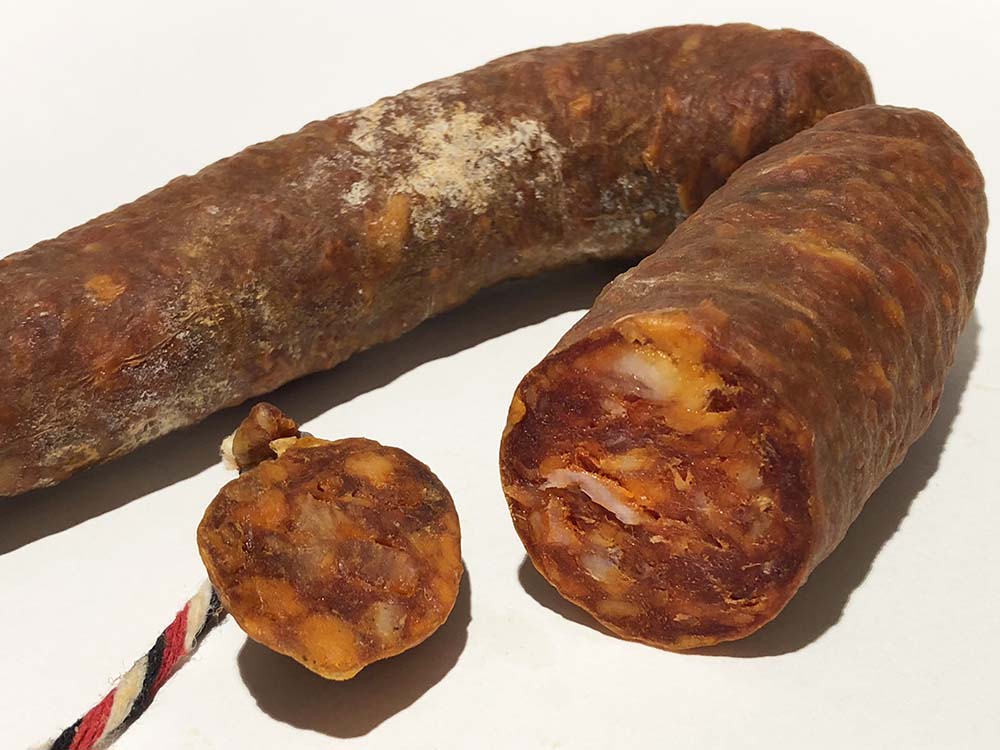
Chorizo de Cantipalos
Chorizo Riojano (Chorizo de la Rioja) is made in the autonomous community of La Rioja in Spain. The sausage carries Protective Geographical Indication (PGI 2010) award.
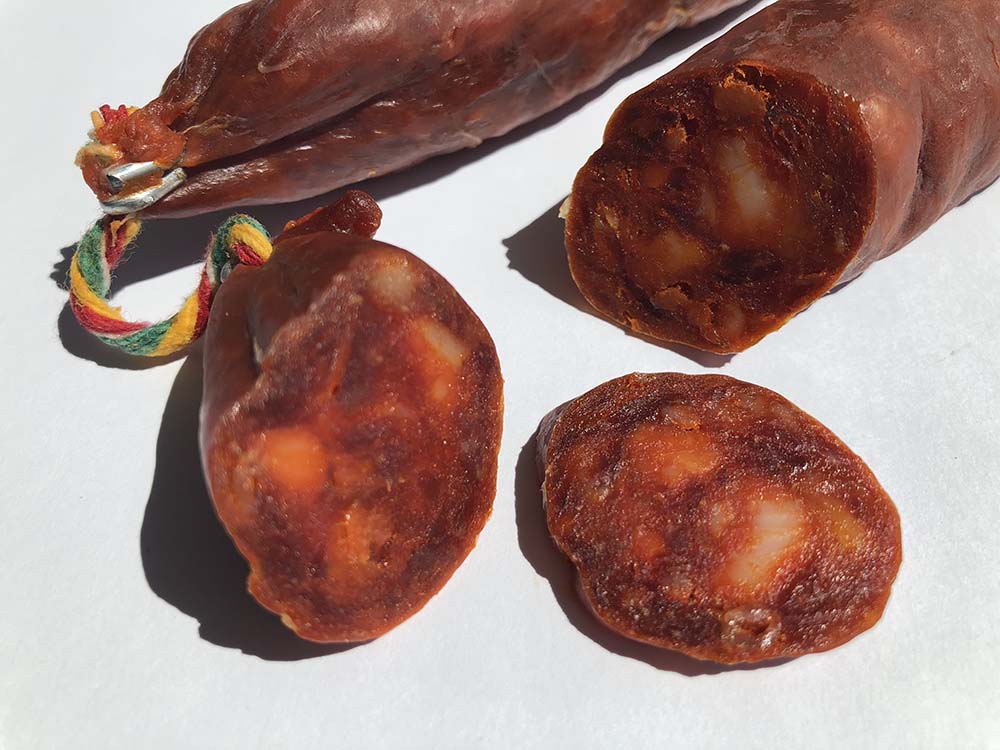
Chorizo Riojano
Longaniza
Longaniza is a long pork sausage which can also be found in Puerto Rico, Dominican Republic, El Salvador, Mexico, Chile, Argentina, and Uruguay. In Philippines the sausage is known as longanisa. Longaniza is one of the oldest sausages already described in 1529 by Ruperto de Nola in his "Libro de Cocina" (Cookbook), and in 1882 by by Angel Muro in his "Diccionario General de Cocina" (Cooking Dictionary).
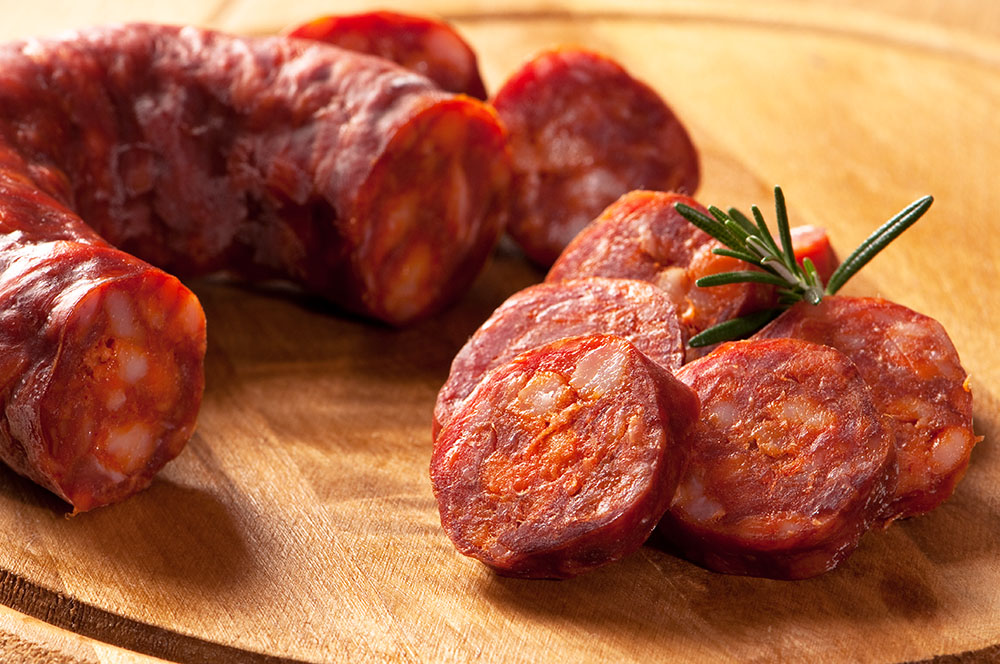
Longaniza.
Processing steps for making longaniza are the same as for chorizo so both sausages are closely related. The sausage is occasionally smoked, too. Both sausages contain pimentón, however, in some longanizas pimentón is either not included or added in smaller amounts. Longaniza differs from chorizo in that it is longer and stuffed into smaller than 40 mm casings. There is no lower limit, longaniza can be stuffed in 22 mm and even smaller casings, which are not permitted for chorizo.
Chorizo and longaniza can be distinguished by shape and size:
chorizo - 30-45 mm, 8-10 cm long, curved links or horseshoe loops (sarta or herradura)
longaniza - less than 40 mm, 30-70 cm long, straight (cular or vela)
Traditional Spanish sausages are usually stuffed into natural casings what gives them irregular shapes (ristra, sarta, herradura, cular, vela, ciego, morcón). To learn more…
Fresh longaniza is available in Spanish supermarkets. It is usually stuffed into 22 mm sheep casings and must be cooked before serving. When salchichón is stuffed into casing smaller than than 40 mm, it may be called longaniza imperial.
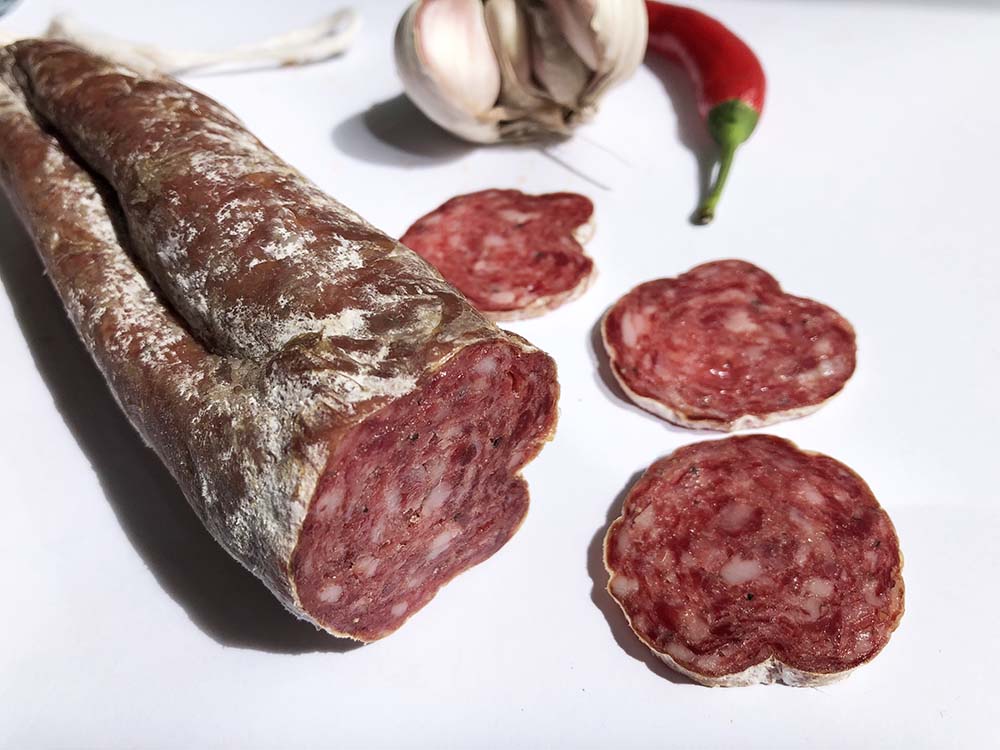
Longaniza, dry cured.
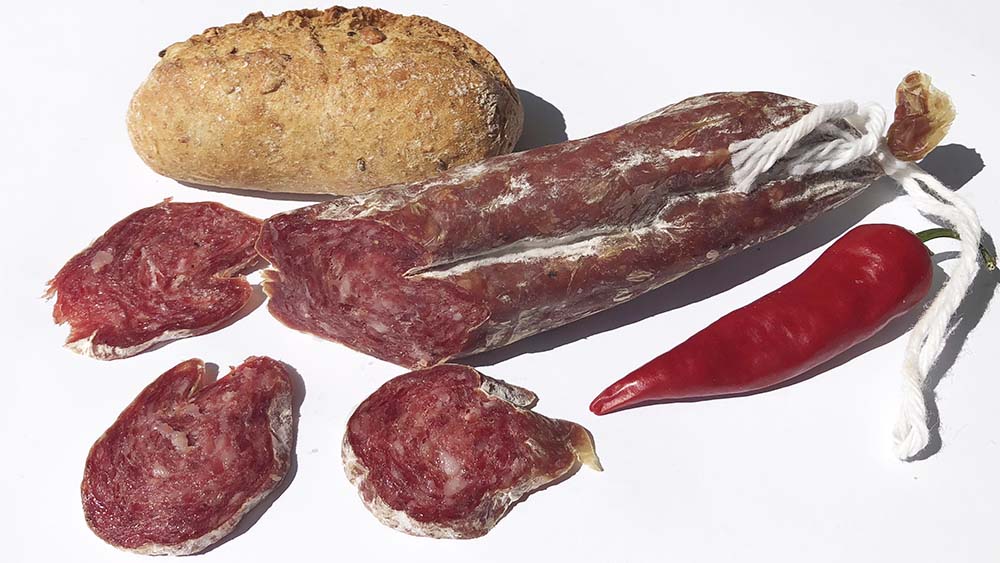
Longaniza de Payés.
Llonganissa de Vic also known as Salchichón de Vic is the best known Spanish longaniza. It is made in the province of Barcelona. Llonganissa de Vic carries PGI, 2001 classification.
The first references written about sausage from Vic date back to 1456. In the past, this product was produced in the farms located in the Plana de Vic as a method of preserving meats, taking advantage of the suitable climate conditions of the area.
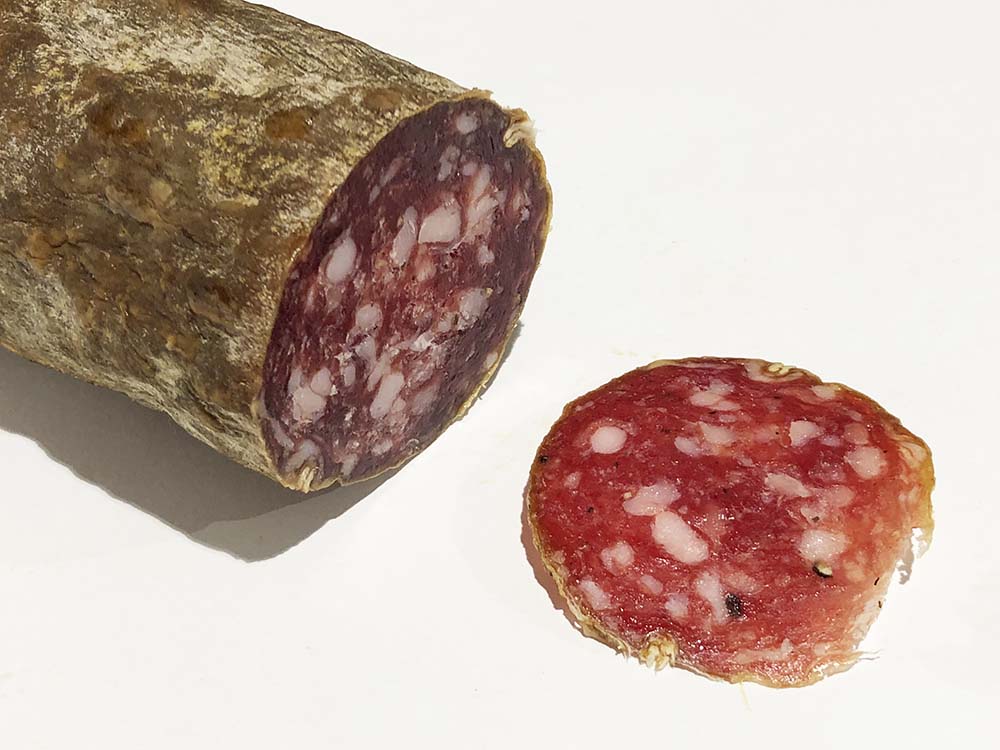
Longanissa de Vic.
Chistorra
From Spanish Government Official Regulations (Boletín Oficial del Estado), BOE-A-1980-6080m, February 7, 1980, Section 4:
Chistorra is a mixture of comminuted pork, or pork and beef, and pork fat, salt, pimentón, garlic, and authorized additives, stuffed into natural or artificial casings, submitted to sufficient drying and maturing with or without smoke; the fully cured sausage must have a diameter of no more than 25 mm, and exhibit the characteristic red color, taste and flavor.
As far as materials, ingredients and processing steps are concerned, there is not much difference between Chistorra, Chorizo and Chorizo de Pamplona. Chistorra has the smallest diameter, Chorizo de Pamplona is very finely ground, and most chorizos are coarsely ground. Fresh chistorra is also available. Chistorra is a delicious sausage that can be found in most supermarkets. Both sausages, Chistorra and Chorizo de Pamplona contain more fat than a typical chorizo, in chistorra the fat can reach up to 50%.

Chistorra.
Lomo Embuchado (Stuffed Pork Loin)
From Spanish Government Official Regulations (Boletín Oficial del Estado), BOE-A-1980-6080m, February 7, 1980, Section 8:
Lomo embuchado (stuffed loin) is made from the ileoespinal muscle of the pig (practically free of external fat, silver screen membrane and tendons), salted and marinated (adobado), stuffed into natural or artificial permeable casings, and subjected to the drying and maturing process.
Processing steps: trimming loin from the outside fat, tendons and membrane commonly known as "silver screen", dry salting or curing in brine, stuffing into natural or artificial permeable casings, tying or clipping both ends, and drying and maturing.
General characteristics: stuffed loin is made from one whole loin muscle. the texture of the loin is firm and resistant to pressing against it, the shape cylindrical, the diameter of the casing 40 mm or more and variable length. The casing adheres well throughout the entire length and may be covered with mold. The slices clean and holding shape, the color red or rosy and the texture uniform and solid without having separate muscles. The taste and flavor characteristic for this product.
Ingredients: salt, pimentón, garlic, black or white pepper, nutmeg and other spices.
Stuffed loins have no quality classification; however, the notice is made on the label when the loin is made from iberian pork. They always carry a red label that implies the Extra product (the highest quality). The embuchado loin should be cut into thin slices and eaten raw, sometimes in a sandwich.
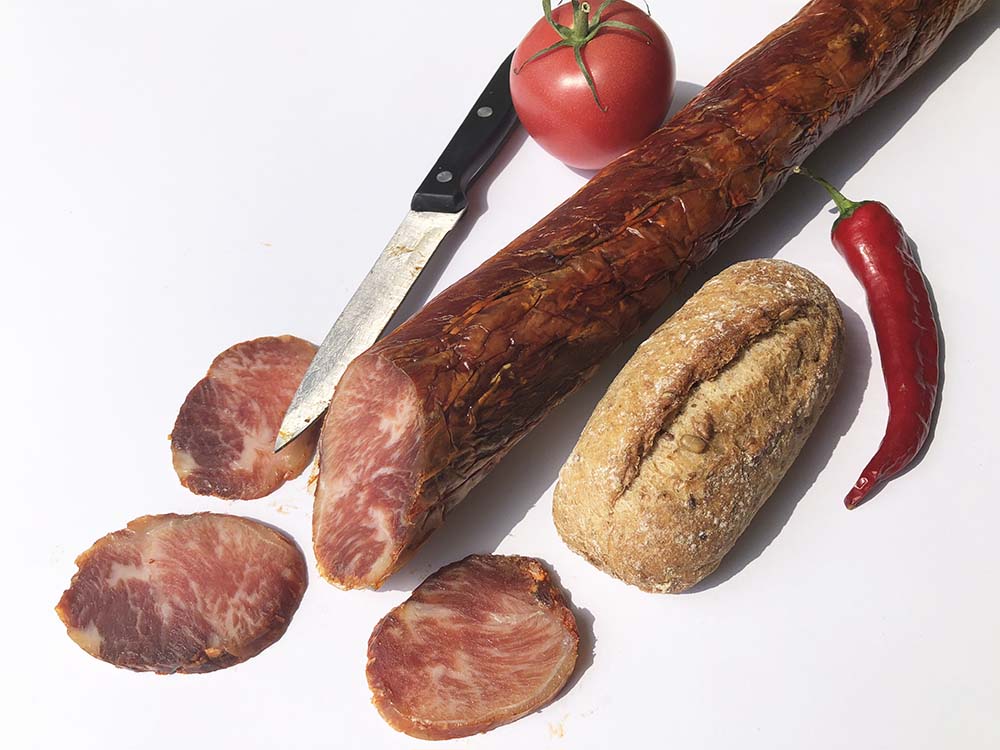
Ibérico pork loin (lomo embuchdo ibérico).
When loin consists of individual muscle cuts and is processed in the same way as a one-piece loin, it is called morcón and is stuffed into pork blind cap (caecum, "ciego" in Spanish), for example Morcón Extremeño. Morcón de Lorca, however, is an exception as it is made with lean head meat and dewlap.
Making Stuffed Pork Loin (Lomo Embuchado)
Salchichón
From Spanish Government Official Regulations (Boletín Oficial del Estado), BOE-A-1980-6080m, February 7, 1980:
Salchichón is a mixture of comminuted pork, beef, or pork and beef, pork fat, salt, spices, additives, stuffed into natural or artificial casings, submitted to sufficient drying and maturing to obtain stability, and characteristic taste and flavor.
General characteristics: salchichón has a firm texture which is resistant to pressing against it, the cylindrical shape, the casing adheres well throughout the entire length and may be of variable length depending on whether the links are straight or U-shaped. The slices are clean and holding shape, the color red and the texture uniform and solid with visible fragments of fat and lean. The characteristic taste and flavor of this product depends on meat, spices and processing steps.
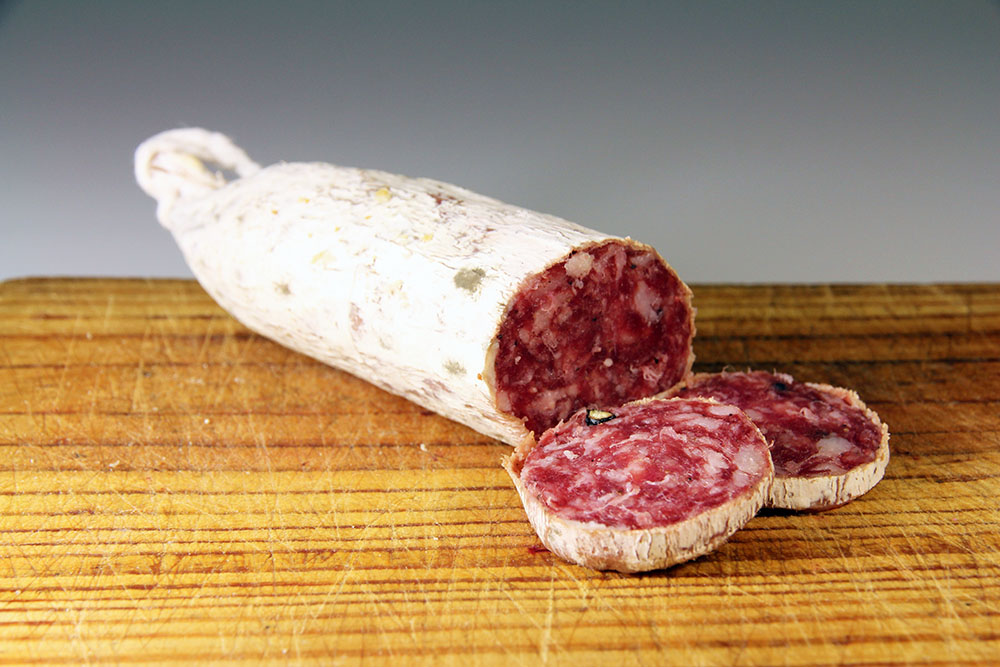
Salchichon.
Ingredients: salt, spices, garlic, black or white pepper, oregano, nutmeg, non-animal proteins, dry milk, sugars, sodium nitrite.
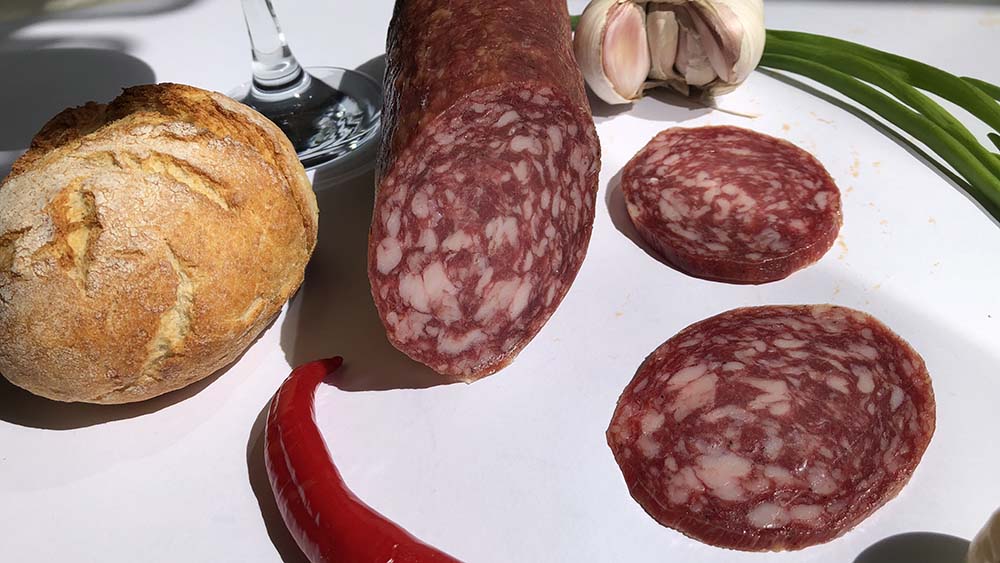
Salchichón is a large diameter and quite long dry sausage, usually stuffed into pork bung or suitable artificial casings.
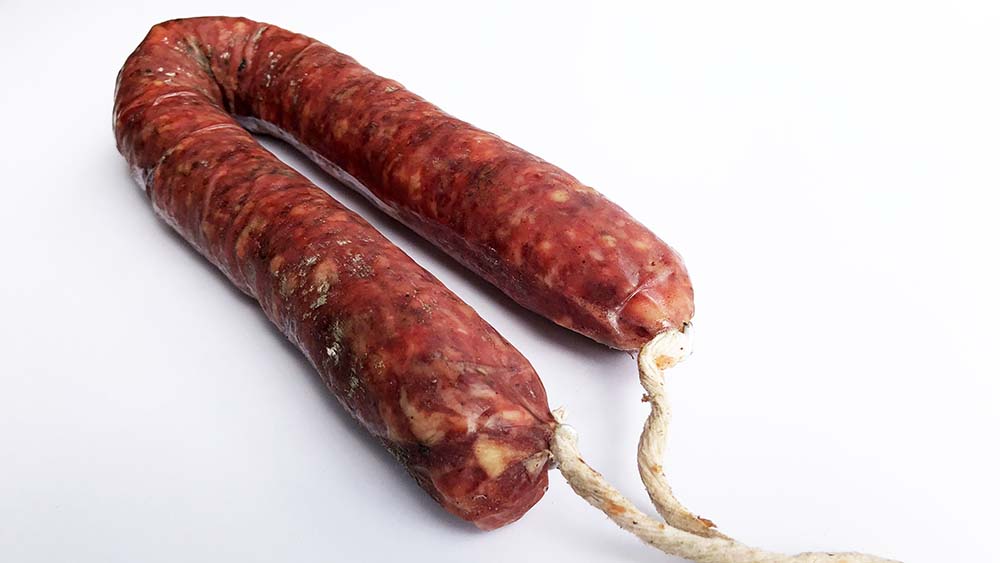
In most cases salchichón is stuffed into straight pork bungs, however, in this photo it is formed into U-loop (herradura style).
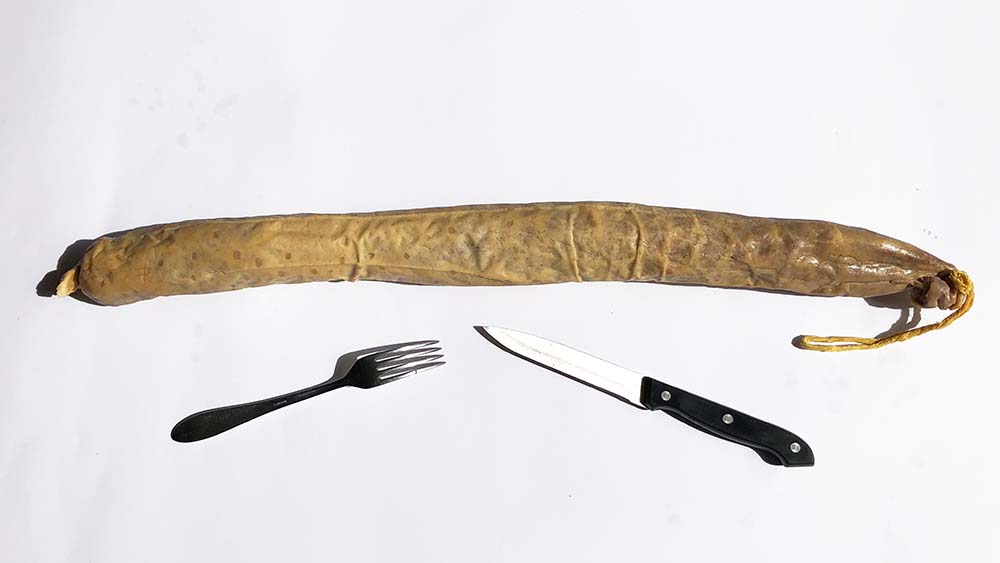
Salchichón is a large sausage, this one is 55 cm (22") long.
Salchichón is the Spanish equivalent of Italian salami. Salami probably has a stronger name recognition at least in the USA, however, salchichón is a superb sausage made from first grade meat. After chorizo, salchichón is the second most popular Spanish sausage. Due to its popularity salchichón is produced locally in many areas so different varieties can be expected. The typical ingredients are lean pork, lean beef, pork hard fat, salt, sugar, ground and whole black pepper, nutmeg, cilantro, sherry wine and additives such as nitrite, nitrate, phosphates, which are used by commercial producers. Classical, traditional salchichón is made with black pepper only, no other spices are included. Pimentón is not added to salchichón, and this differs the sausage from chorizo. The deep orange-red color of chorizo, cannot be mistaken with the red color of salchichón.
Salchichón is served as a snack on its own, on sandwiches or in side dishes.
Salchichón de Vic is also known as Llonganissa de Vic (described above)
Fuet
Fuet is a smaller version of salchichón so it is a kind of salami stuffed into a smaller, usually less than 40 mm, irregular natural casing, about 30 cm (1') long. Fuet in Spanish means "lash", the word fuete means "whip" and the sausage resembles the whip. The sausage is called fuet in Spanish Catalan language and fouet in French. In pure Spanish Catalan it is often addressed as longaniza imperial. This is why fuet is sometimes referred as a smaller version of longaniza which is not correct as longaniza is actually close to chorizo and they both include pimentón. The sausage originates in Catalonia in northern regions of Spain. It is a small diameter sausage, very popular in all areas of Spain and in many European countries. Fuet is sliced diagonally, a little thicker than salchichón. Its main characteristic is that it is covered with white mold. Due to its popularity it is manufactured in many areas so it can be expected that there will be small differences in its composition, especially in commercially manufactured products where fuet includes nuts or figs.
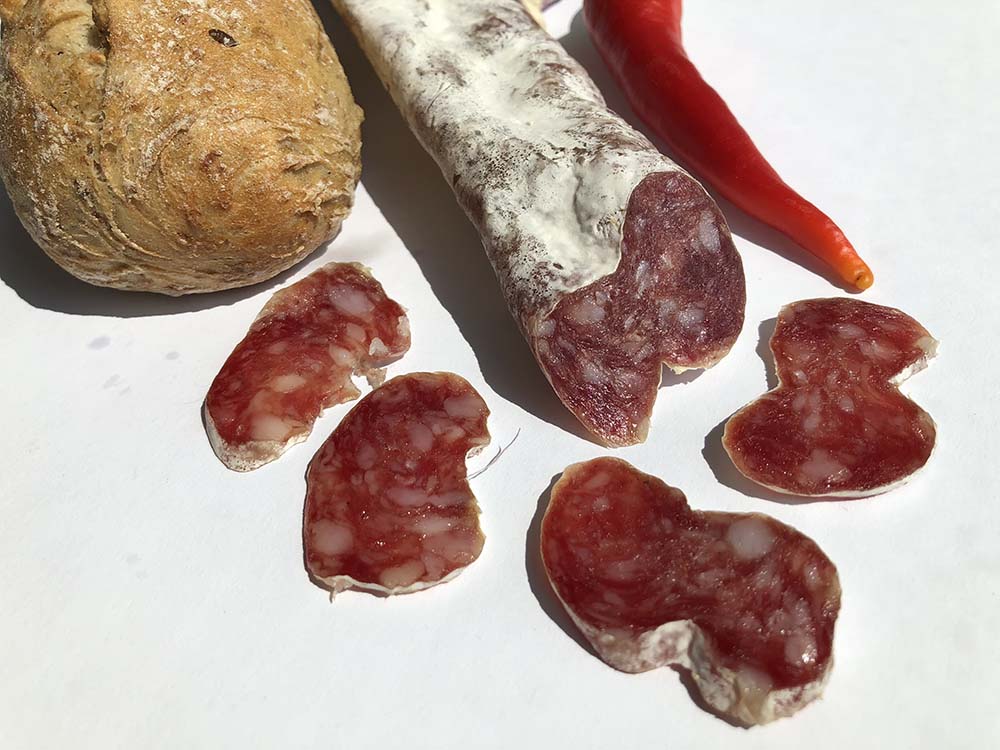
Fuet.
Fuet is covered in white mold and the casing is tender and easy to peel off, however, many people don't bother with removing the skin as the mold is pleasantly smelling, almost aromatic. The saying that follows says it all:
"The fungus is always good, it is the perfume of the fuet"
(Siempre que el hongo sea bueno, es el perfume del fuet)
Spanish Salami
From Spanish Government Official Regulations (Boletín Oficial del Estado), BOE-A-1980-6080m, February 7, 1980, Section 7:
Salami is a mixture of comminuted pork, beef, pork and beef, pork fat, ground into particles smaller than 3 mm (1/8"). stuffed into straight sections, dried, smoked and matured to acquire characteristic taste and flavor.
When cut, the slices should display easily noticeable particles of fat and lean.
Spanish salami comes in two grades: Extra and the 1st grade.
Technology of making traditional salami is very similar to that of producing dry sausages such as salchichόn or chorizo. Pimentόn is not added at all to Spanish salami. Technically speaking, salchichόn may be considered to be the Spanish equivalent of Italian salami. High quality traditionally produced Italian salami is made with very little added sugar or none at all. There is no sugar allowed in traditionally made Hungarian salami, so there is little natural fermentation. Those sausages are called salami in their countries, but if the meat was ground with a larger plate they might be as well called salchichones.
Salami, although of Italian origin, is the sausage which can be found in each corner of the world, including Latin and South America. It is especially popular in Argentina where it is produced on a large scale.
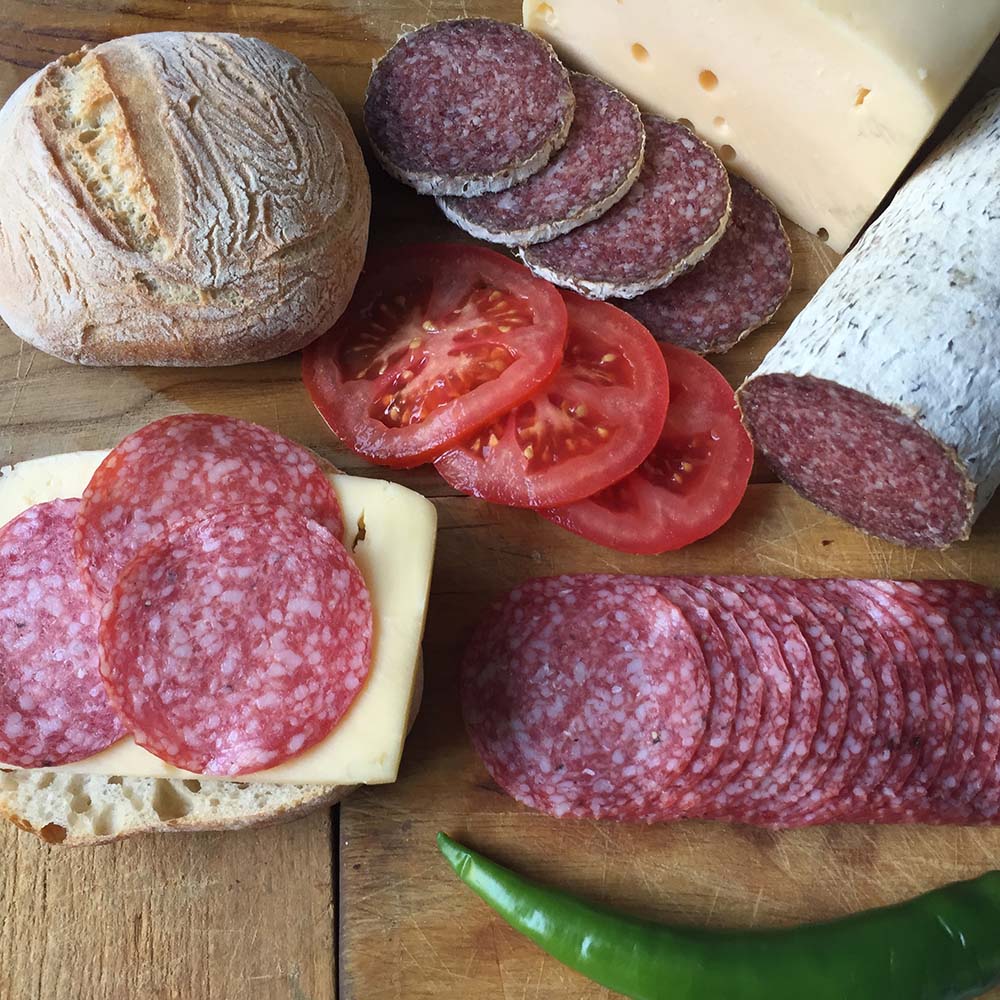
Spanish salami.
Secallona-Somalla-Petador-Espetec
Secallona, Somalla, Petador, Espetec - although those names sound mysterious and exotic, the truth is that they all are dry sausages and they all can be called small diameter fuets or longanizas. The manufacturing process is basically the same, what separates them is the size. Longaniza is packed into a large diameter, fuet into medium and secallona into a small diameter casing. Secallona is very dry and wrinkled, somalla is moister. Secallona or somalla are U-shaped, about 50 cm (20") long and usually without mold, unlike fuet which always carries white mold. Petador is the name that is common for those sausages in Catalonian city of Sabadell, 20 km north from Barcelona. Espetec or fuet is basically the same Catalonian sausage.
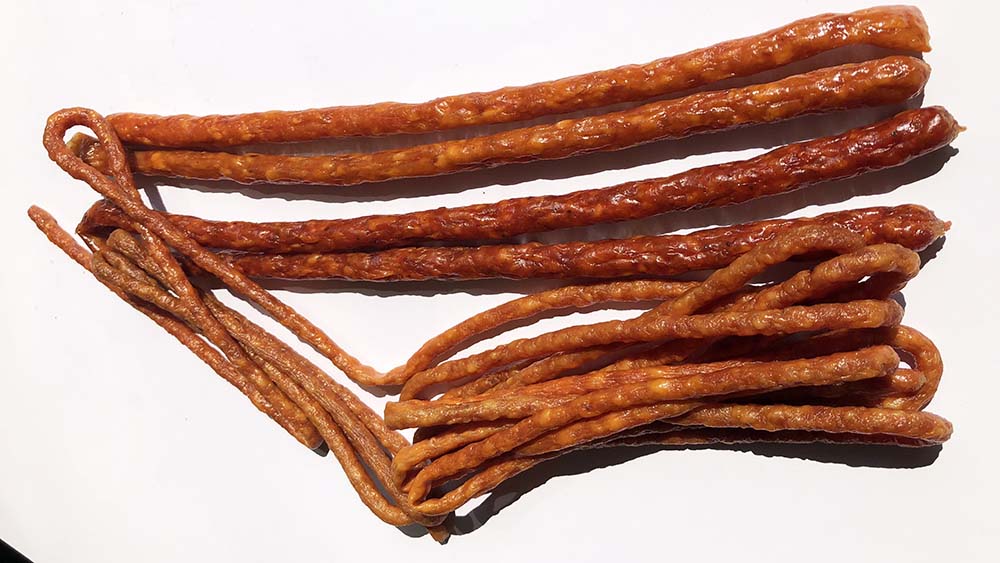
Secallona.
Didalets. Didalets, for example didalets de secallona, are very short small diameter sausages, about 10 cm (4") long, weighing 10 g (1/3 oz) each what makes them a convenient snack. They can be cooked or fresh sausages, but they are very short.
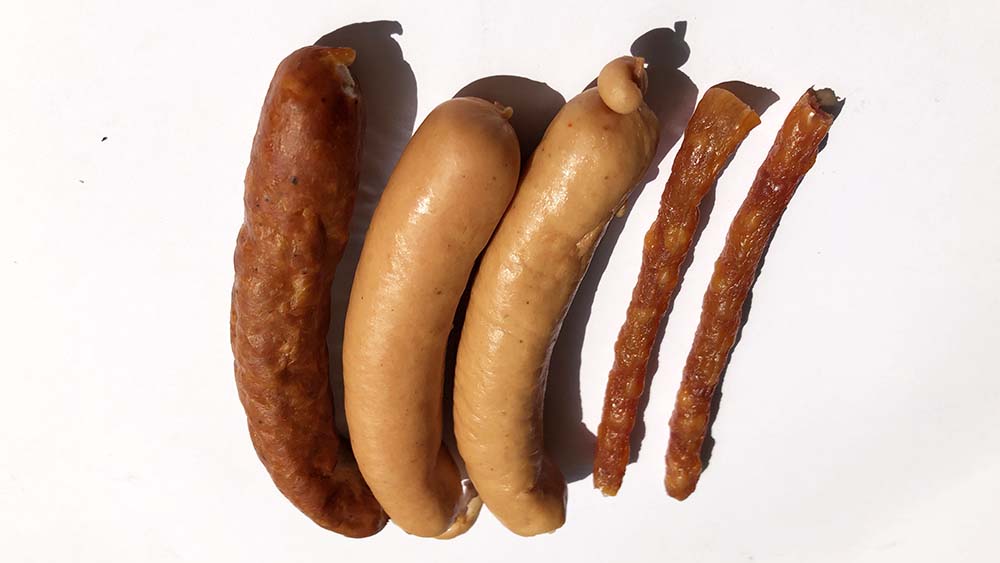
Didalets.
Salchichas
From Spanish Food Code (Cόdigo Alimentario Español-Decreto 2484/1967):
Salchichas are soft sausages, raw, of red or white color, made from finely comminuted pork or pork and beef (occasionally from sheep, chicken or game), mixed with pork fat and stuffed into 18-28 mm natural or synthetic casings, 28 mm being the maximum diameter."
This definition pertains to a fresh salchicha which be stored for up to 7 days in refrigerator or be frozen, however, they must be fully cooked before serving by frying, grilling or boiling.
Pimentόn can be added or not and that influences the color of the sausage which can be red or yellowish. Due to its small size salchichas are often tied off into small units about 50 grams (1.76 oz) each.
Salchichas Frankfurter Type (tipo Francfort) are sausages cooked in water, made from very finely comminuted (emulsified) pork or pork and beef, mixed with pork fat and stuffed into 18-28 mm natural or synthetic casings, 28 mm being the maximum diameter, smoked and cooked in water.
Salchichas which are cooked first and then smoked are called Wieners (tipo Viena).
Only the manufacturer knows what goes into mass produced salchichas; pork, beef, sheep, poultry, de-boned meat plus flours, starches, dry milk, sugar, soy proteins, gums, colorings, antioxidants, sodium nitrite, flavorings, water and anything that is not prohibited by the government as dangerous to our health.
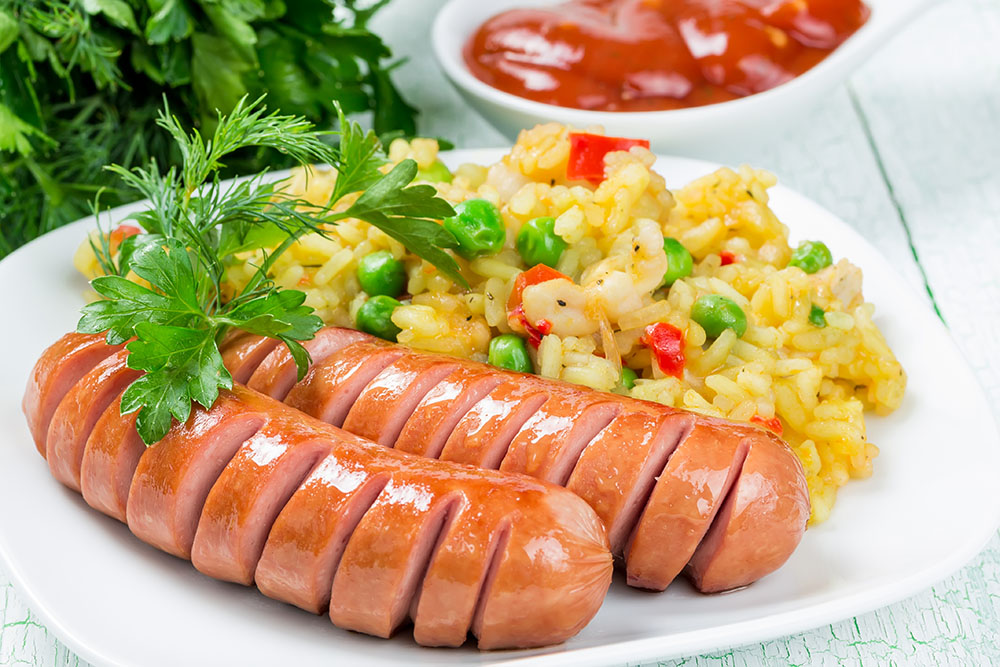
Salchicha.
Some well known salchichas: Salchicha Madrileña, Salchicha de Trufas, Salchicha de Ternera, Hot Dog, Frankfurter, Wiener plus hundreds of German sausages such as Bratwurst, Bockwurst, Bierwurst, Weisswurst. The majority of salchichas are cooked in water during processing, however, some like Bratwurst, Salchicha de Trufas, Salchicha de Ternera are fresh type and are usually fried or grilled before serving.
The names of Spanish liver sausages do not start with the word "liver" (higado in Spanish), but have salchicha prefix ie. Salchicha de higado (Liver Sausage), Salchicha de higado con trufas (Liver Sausage with Truffles).
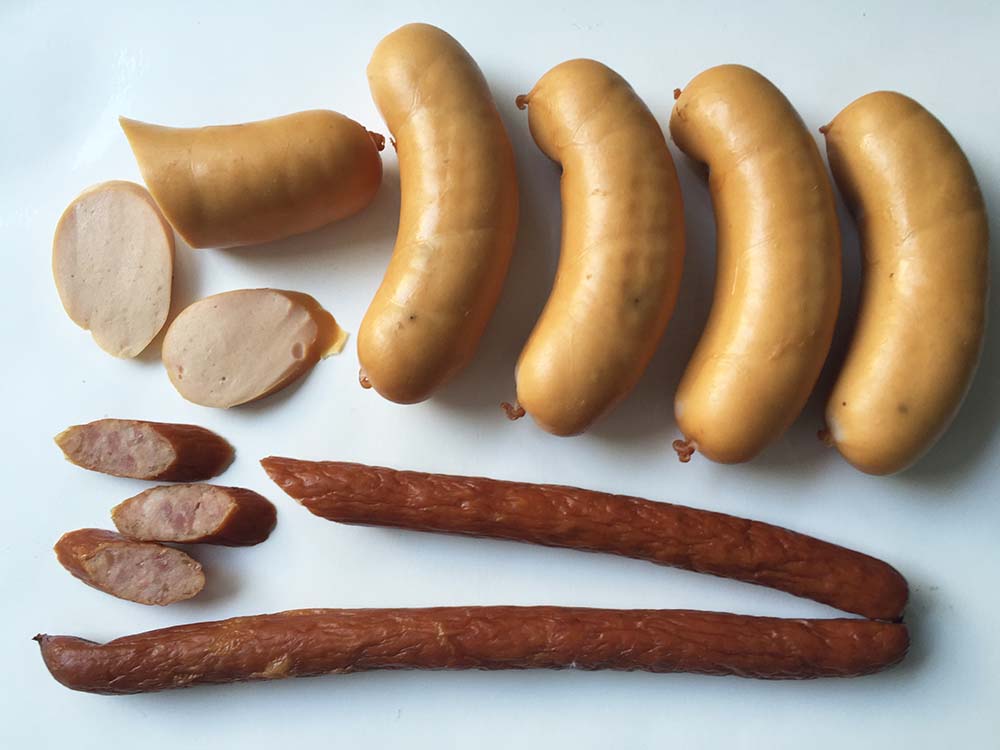
Salchicha is a term that covers almost any fresh or cooked small sausage.
Butifarra
From Spanish Food Code (Cόdigo Alimentario Español-Decreto 2484/1967):
Butifarra is generally a white sausage, made from pork or pork and beef, stuffed into a natural pork or beef small diameter casing and cooked or not, in water. Butifarras are popular in Spain regions facing the Mediterranean sea: Catalonia, Balearic Islands, Murcia, Valencia and Andalusia. As the Catalan language differs somewhat from standard Spanish, butifarra produced in Catalonia is spelled "botifarra." Butifarras can be found in Colombia, El Salvador, Mexico, Argentina, Uruguway, Chile, Peru, Bolivia and Paraguay. Butifarras are cooked so they are ready to eat sausages, however, they are occasionally added to other dishes or grilled and served with beans. Butifarras are stuffed into small diameter casings, linked every 15 cm (6") or left in a continuous coil.
There are two types of butifarra:
Butifarra Negra - made with blood (negro means black), so they are related to morcillas (blood sausages).
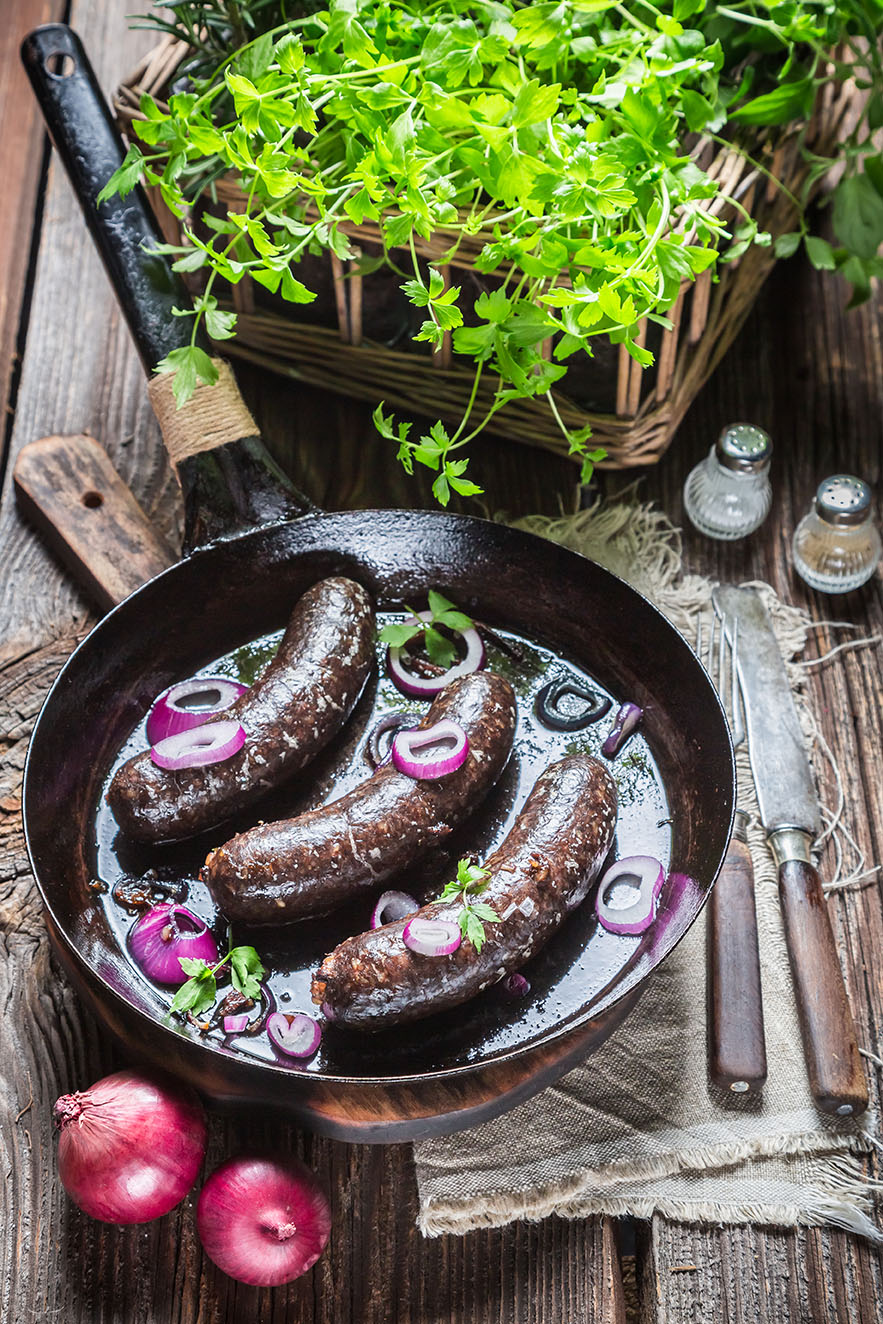
Butifarra Negra.
Butifarra Blanca - made without blood. It can be classified as salchicha.
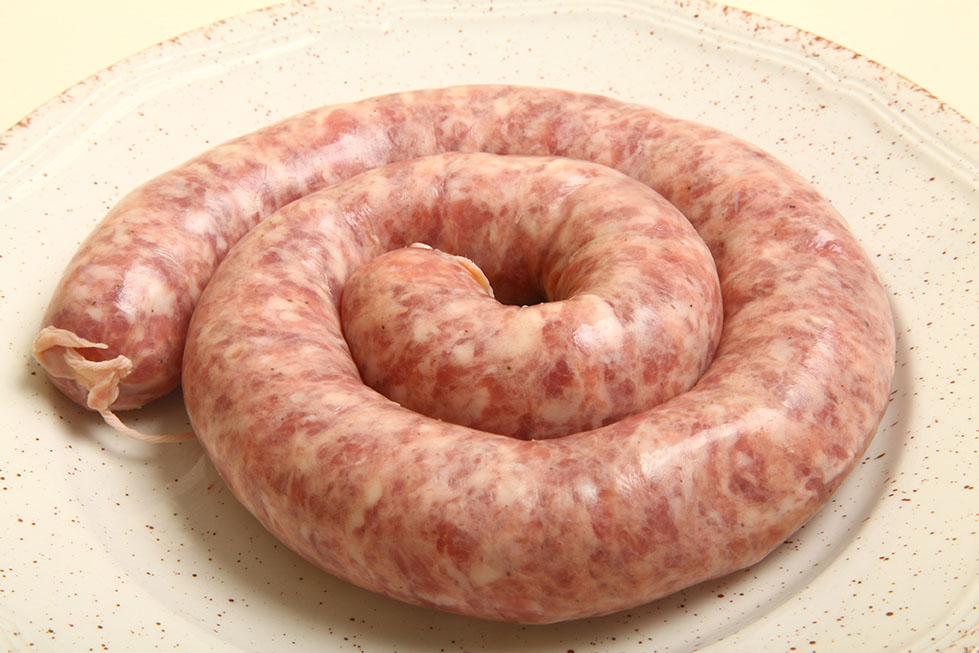
Butifarra left in a continuous coil.
Then there are varieties of butifarras made with: liver (Botifarra Traidora), truffles and mushrooms, tongue, onions and pine nuts, rice, bread, parsley and garlic (La Girella), butifarra de perol, sweet butiffaras made with honey (Butiffara Dulce de Gerona) and very pretty Colombian Butifarra Soledeña.
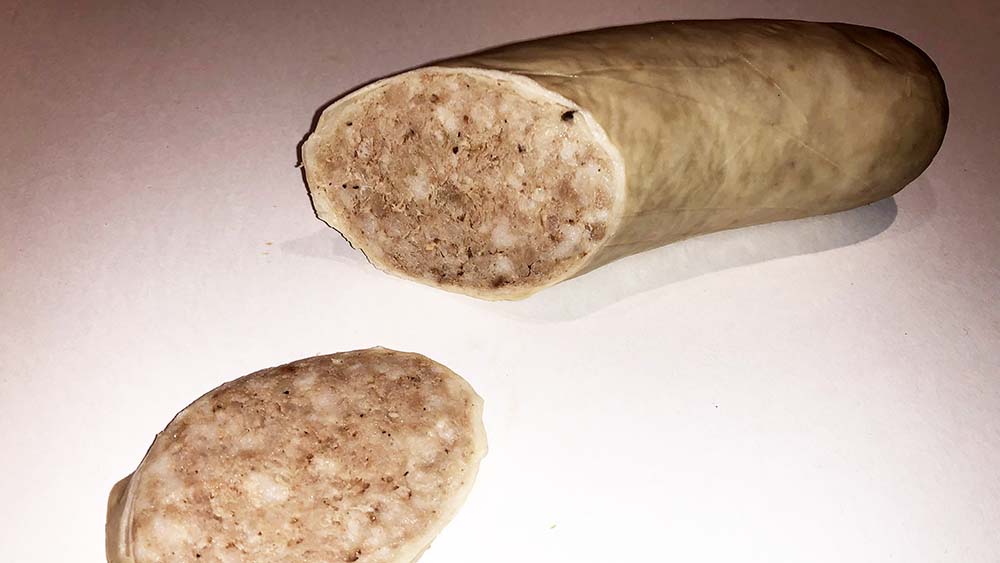
Butifarra.
Butifarras are usually made from lean pork, but occasionally other meats are included, even lungs, ears, or tongues, for example Butifarra Traidora. They contain less fat than chorizos or other sausages. Common ingredients are salt, pepper, nutmeg, cloves, garlic, and eggs, however, they may be enriched with mushrooms, truffles, foie gras, and herbs. Pimentόn, if used at all, is applied in a small amount.
Butifarrόn
From Spanish Food Code (Cόdigo Alimentario Español-Decreto 2484/1967):
Butifarrόn is a white sausage made from pork or pork and beef, comminuted into small and large pieces, stuffed into pork or beef bungs or middles, or artificial casings, baked (conditioned) in oven at no more than 20° C (68° F), cooked in water below boiling point, and submitted to drying. Butifarrόn is popular in Catalonia, where it is often served in stews and white beans, according to food code it is a white sausage, basically related to butifarra.
There is also Butifarrόn Negro (black butifarrόn) which is popular in Balearic Islands (Mallorca, Menorca, Ibiza, Formentera). Balearic butifarrόn is made with offal meat and a little blood so it is called Butifarrόn Negro. It contains salt, pepper, aromatic spices such as cinnamon, cloves, anise, nutmeg, fennel and is cooked in water like any blood sausage. Butifarra and Butifarrόn are quite similar, the first sausage much easier to find, at least outside Catalonia.
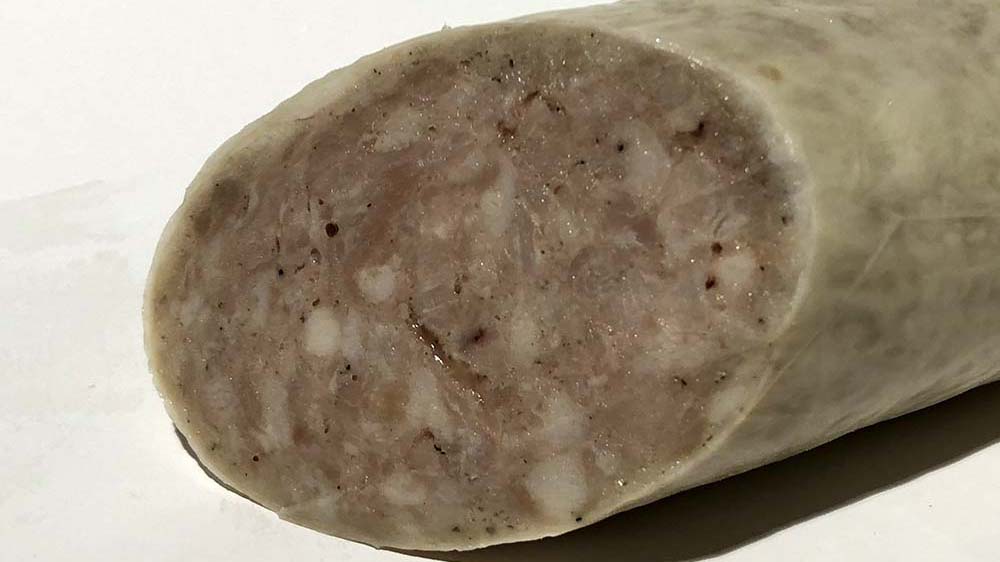
Butifarrόn.
Sobrasada
From Spanish Food Code (Código Alimentario Español-Decreto 2484/1967):
Sobrasada is a raw, soft and red sausage made from pork or pork and beef, pork fat and spices, marinated, stuffed and dried.
The sausage originates in Spanish Balearic Islands (Majorca, Menorca, Ibiza and Formentera), but is also popular in Murcia, Extremadura and nowadays it can be found everywhere in Spain. Sobrasada is produced from finely chopped lean pork and pork belly, mixed with salt, pimentón and spices. The recipes vary depending on who makes the sausage, but the manufacturing process for PGI protected Sobrasada de Mallorca must confirm to the rules enforced by Majorcan Regulatory Council (Consejo Regulador). The sausage is stuffed into large diameter pig casings and the sausages are dried for 4-8 weeks, depending on the diameter of the casing and the texture, color and flavor that is expected. Sobrasada de Mallorca exhibits a vivid red color and its texture is soft enough to be spread on bread. There are two varieties of Majorcan sobrasada:
Sobrasada de Mallorca carries protective geographical indication certificate (PGI 21/06/1996).
The sausage must meet the following requirements: lean pork (30-60%), back fat (40-70%), pimentόn (4-7%), salt (1.8-2.8%) and a touch of pepper. The following spices are often added: rosemary, thyme, oregano. only natural casings are allowed.
Sobrasada de Mallorca de Cerdo Negro.
Sobrasada de Mallorca de Cerdo Negro carries protective geographical indication certificate (PGI 21/06/1996). All meat must come exclusively from black pig (cerdo negro) that grows locally on the island of Mallorca, and only natural casings are allowed.
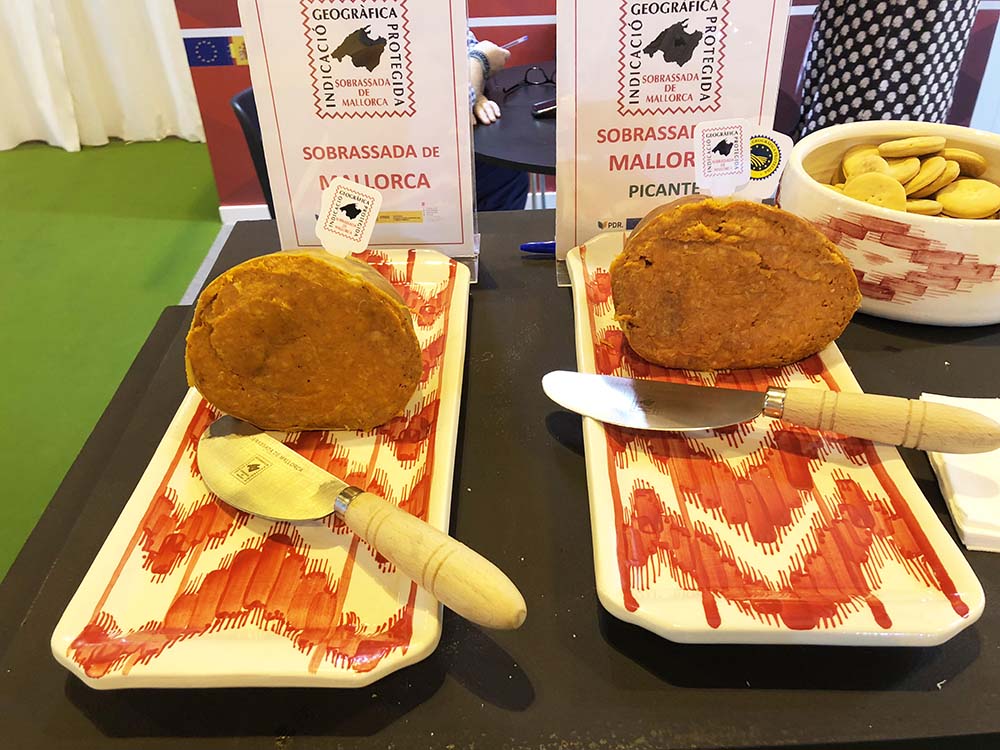
Sobrasada de Mallorca. Photo taken at Sobrassada de Mallorca www.sobrasadademallorca.com booth at the Meat Attraction Show in Madrid, September 18, 2018..
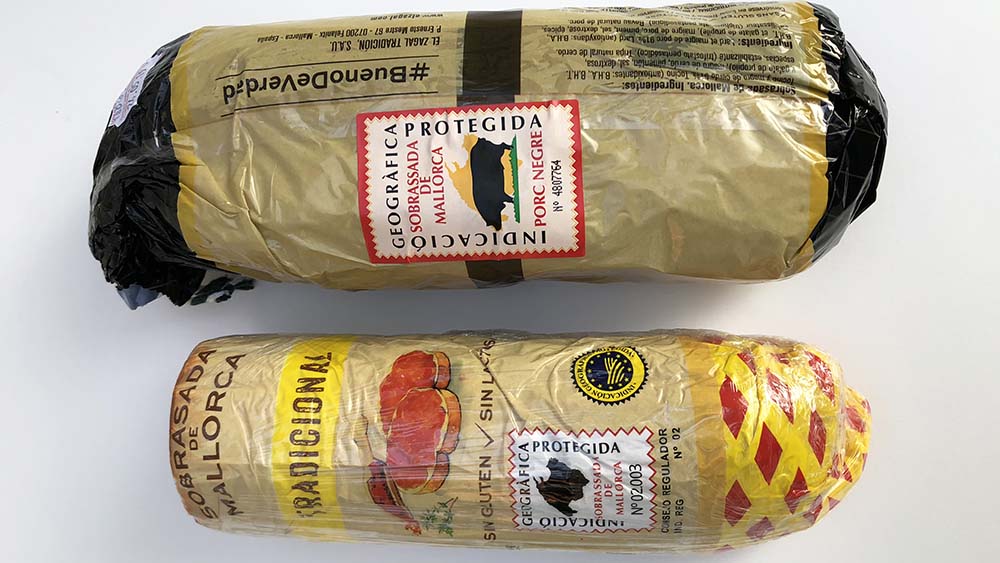
Majorcan sobrasada can be found all over Spain.
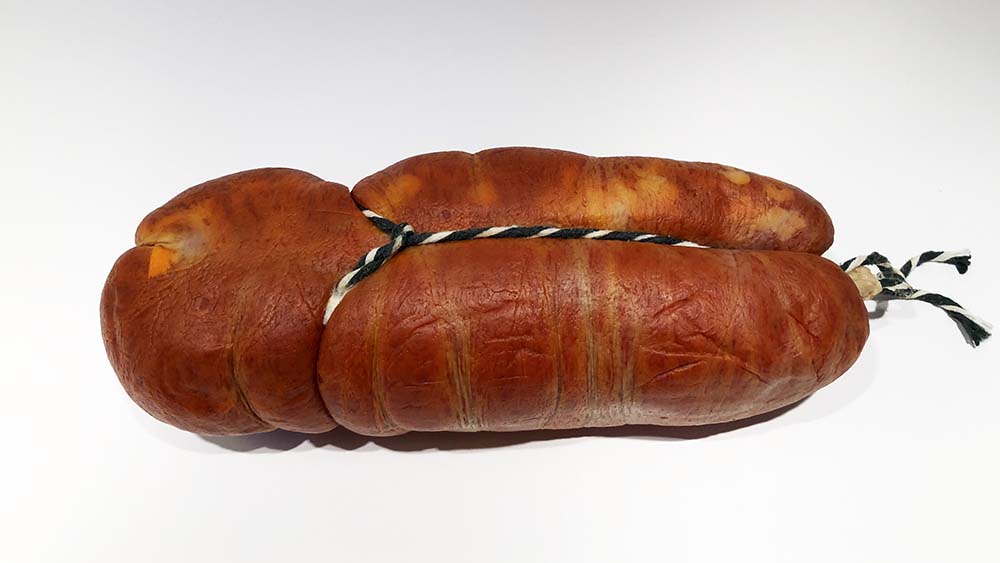
Packed into blind cap.
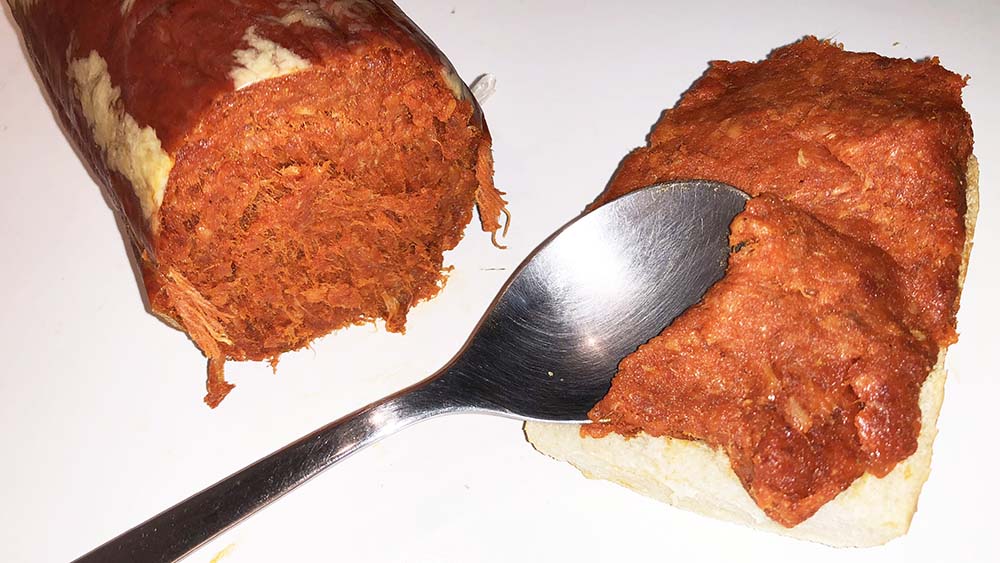
Sobrasada is a soft spreadable sausage which is served on a roll, very often with honey or apricot marmalade.
There are also sobrasadas made on Spanish mainland, but they cannot carry (PGI) certificate. There is a noticeable difference in quality; they are much fatter and the color is less intense.
Sausages Made with Offal Meat (Embutidos de visceras).
Sausages made with offal meat (embutidos de visceras) are sausages that besides the meat, contain pieces of cooked entrails and offal meat which are then stuffed.
Sabadeñas, longanizas gallegas, and salchichas de higado also belong to this group. Liver sausages are most prominent example of this group.
Why Use Offal Meat
The question may arise as to why there are so many different, almost unappetizing meat cuts in certain sausages. They are generally termed "offal" meat: liver, heart, pancreas, tongue, pork head, snouts, dewlap, spleen, kidneys, lungs, stomach and tripe. Slaughtering and processing the pig takes longer than a day. When the animal's arteries are cut, blood starts gushing out and is immediately collected. Blood and liver spoil fastest so in the past, without access to refrigerators, the most practical way to save those cuts was to process them as soon as possible and that is the reason why some sausages are made with offal meat.
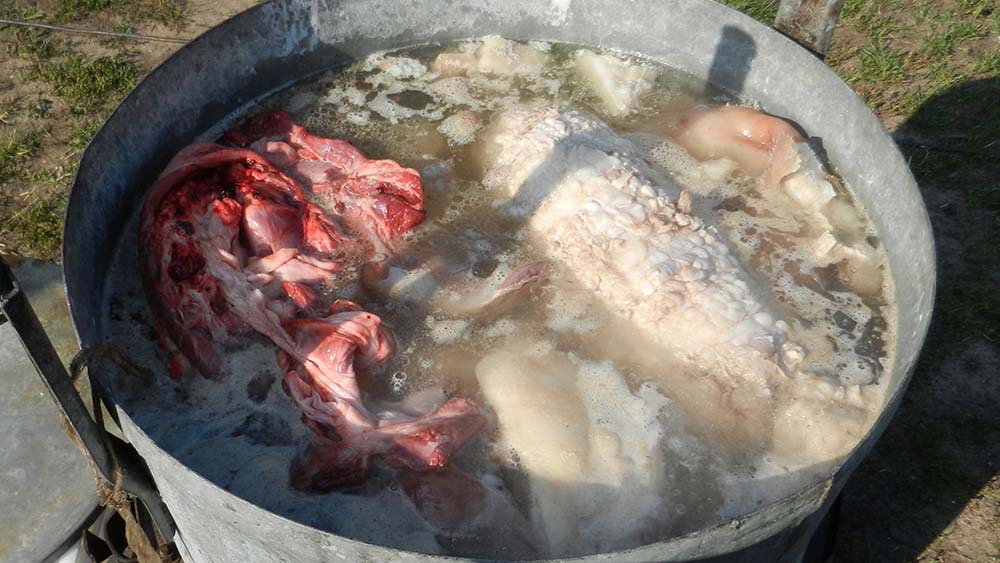
Once the noble cuts of meat like ham, loin, pork belly are removed, there is a large amount of back fat, internal fat as well as skins remaining. All those meats are cooked, separated from bones and used for making head cheeses, blood and liver sausages.
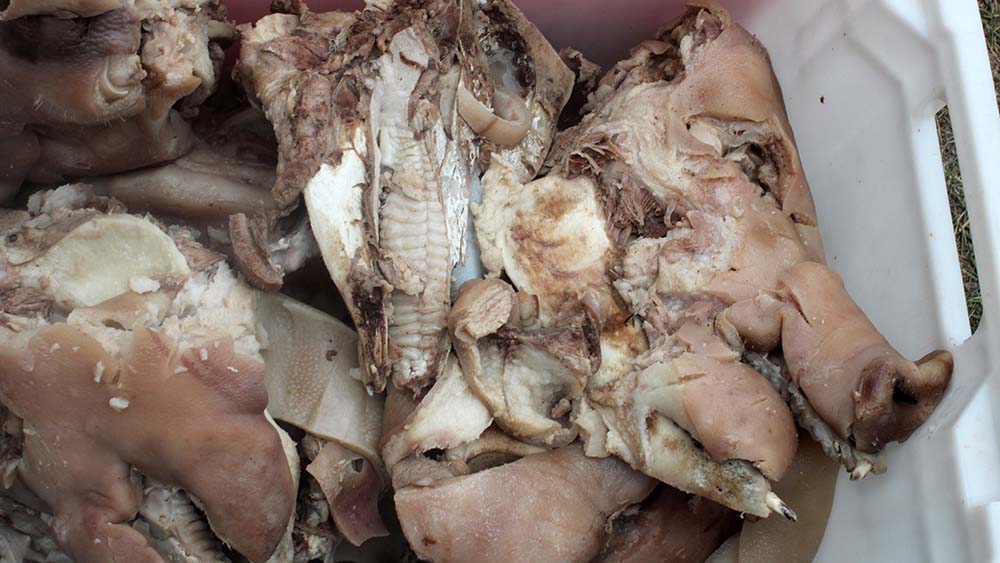
Cooked offal meat would be separated from bones, mixed with fillers (rice, bread, grouts, onions), spices, blood, stuffed into casings and cooked again.
Salchicha de Higado (Liver Sausage)
Spanish liver sausages borrow the prefix of salchicha and combine it with the word liver (higado means liver in Spanish), for example: Salchicha de Higado (liver sausage), Salchicha de Higado de Cerdo (pork liver sausage), Salchicha de Higado de Oca (goose liver sausage). You will find dozens of liver sausages in Germany or Poland, even in the US, but they are hard to find in Spanish stores. The production of liver sausages has not taken off in countries with hot climates, as it was difficult to preserve those sausages, at least in the past when there was no refrigeration. Surprisingly, liver patés are popular and can be purchased in fancy delicatessens. They are made with pork, poultry or rabbit liver, pork fat and spices. Then they are placed in molds and slow cooked in water or baked in oven, usually in a double pot filled with water (al baño maría).
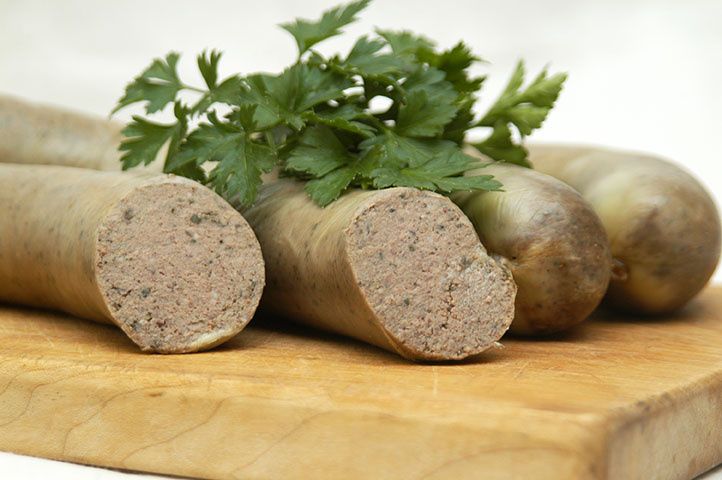
Liver Sausage.
Liver purchased in a supermarket is quite clean, but make sure that there are not any glands, tendons, membranes or connective tissue left remaining. Soak the liver in water to remove any traces of blood. For the same reason liver is scalded briefly or immersed in hot water, however, do not cook liver as it will lose its emulsifying properties. The liver must be processed raw.
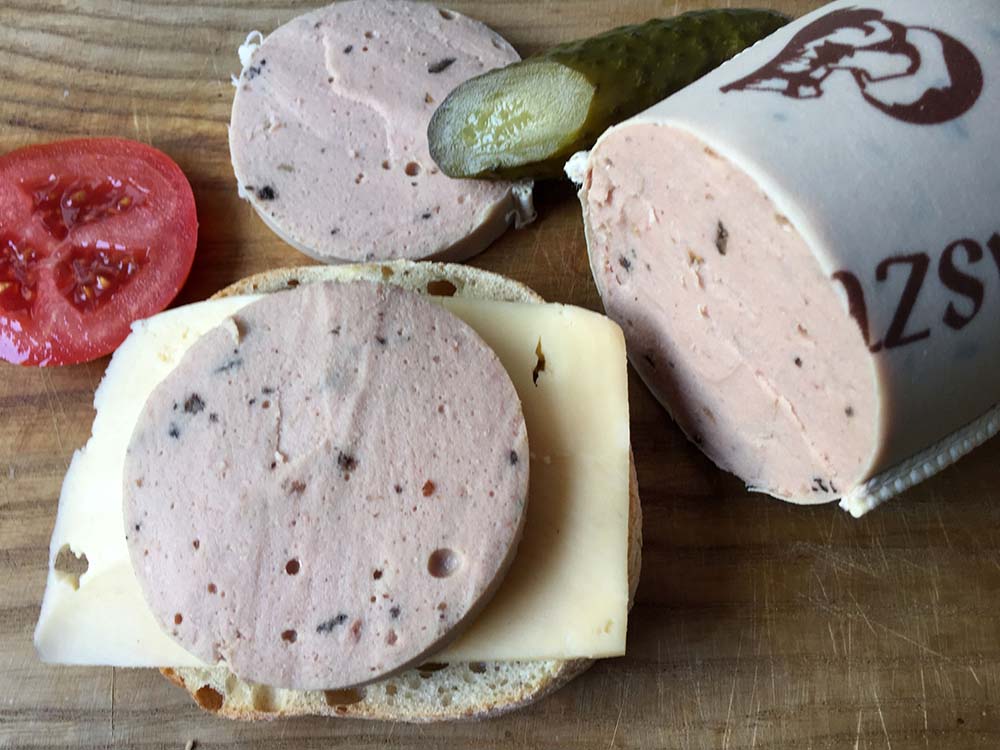
Liver Sausage.
Sausages Made with Blood (Embutidos de Sangre).
From Spanish Food Code (Código Alimentario Español-Decreto 2484/1967):
Blood Sausages (Embutidos de sangre) are semi-soft or soft sausages, raw or cooked, with blood as the main component to which are added meat, entrails, fat, lard and different products of vegetable nature, and stuffed into large diameter casings.
To this group belong different types of botagueñas and morcillas. No other country has a richer and more diversified selection of blood sausages than Spain. Blood sausages are popular in most countries of the world except the USA. They carry their own descriptive name: Germany-Blutwurst, Poland - Kiszka Krwista or Kaszanka, England - Black Pudding, France - Boudin Noir, nevertheless, Spanish morcillas are in a class by themselves.
Morcilla (Blood Sausage)
Blood sausage is a sausage that contains blood. The name morcilla comes from the adjective morcillo which denotes something black with reddish hairs like a breed of a horse. The majority of morcillas are processed in hot water, however, there are some which are only dried. A classic Spanish morcilla is made with blood, fat and onions. Additionally they often include a filler material: rice, potatoes, pumpkin, bread, bread crumbs and flour. Buckwheat or barley groats so popular in Polish, German or Russian blood sausages are not popular in Spanish morcillas.
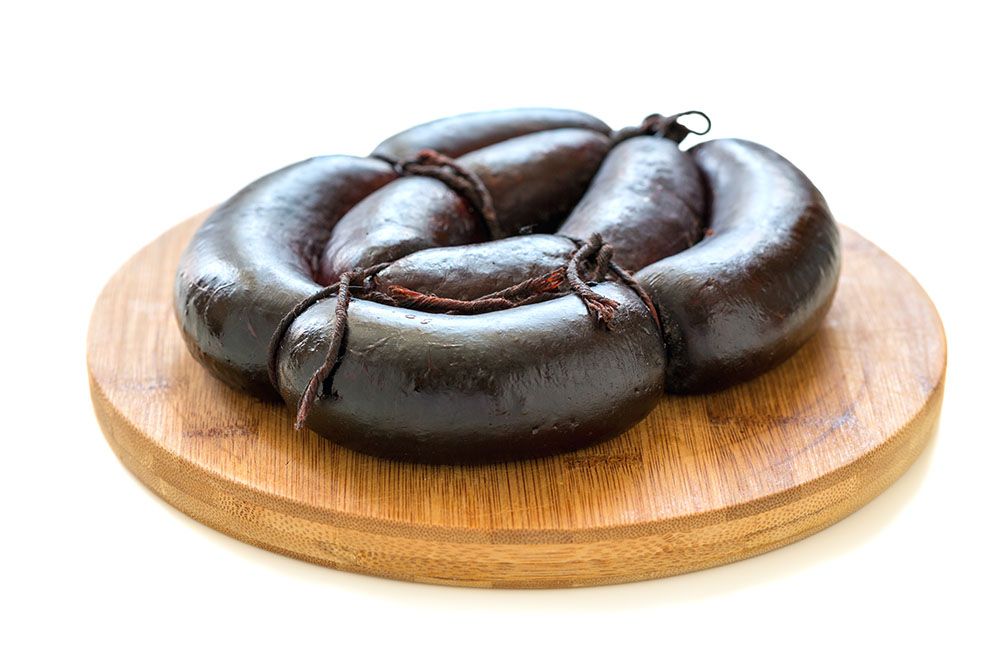
Morcilla - Blood Sausage.
Morcilla de Burgos is the best know blood sausage in Spain. It was awarded European Protected Geographical Indication (PGI) certificate in 2018.
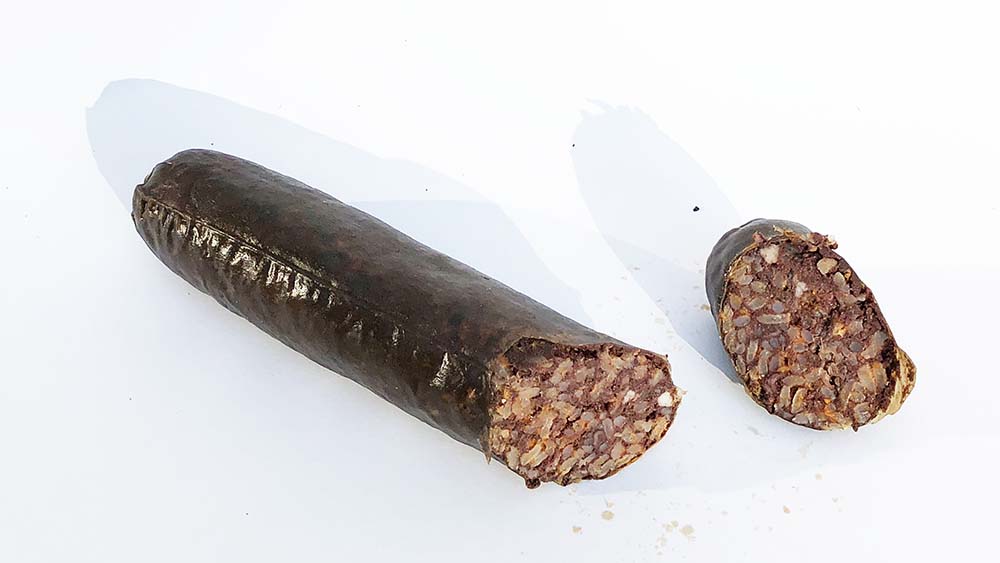
Morcilla de Burgos.
Sweet Blood Sausage (Morcilla dulce)
A popular variety of blood sausage is Sweet Blood Sausage (Morcilla Dulce) which is made with blood, sugar, flour, dry wheat bread, wheat flour, nuts, raisins, figs and aromatic spices, cinnamon being a must. Sweet blood sausage is produced in many Spanish regions for example in La Rioja and in Canary Islands. In Argentina it is known as Morcilla Vasca.
A general recipe: pork blood, cream or full milk, dry wheat bread or rolls, wheat flour, dry figs, raisins, pine nuts. Sugar, pepper, cinnamon, cumin, ground star anise, and ground cloves. Mix blood with sugar and milk, add crushed rolls and let them soak. Add remaining ingredients and spices, mix. Lastly add enough flour so the mix is soft, but not running. Stuff into 36-40 mm casings, make loops and tie the ends together. Cook in water at 80° C (176° F) for 45 minutes. Cool and refrigerate.
Dry Blood Sausages (Dry morcillas)
There are some original morcillas which are not cooked, but cured like dry sausages. After the paste (bodrio) was obtained it was processed like regular dry sausages i.e., submitted to marinating (reposo) for 12-24 hours. Then the sausages were dried.
Morcilla Blanca (White Blood Sausage)
There is a variety of morcilla known as Morcilla Blanca which is usually made without blood so technically speaking it is not a blood sausage. The processing steps remain the same as the ones for black morcilla, however, without blood the sausage develops a lighter color (blanco means white in Spanish). Although calling the sausage White Blood Sausage (Morcilla blanca) if there is no blood inside makes little sense, nevertheless this nomenclature is not limited to Spanish sausages, but it is also used in other countries.
England – White Pudding (English call blood sausage a “pudding”, i.e. Black Pudding or White Pudding).
France – Boudin Blanc (blanc means white in French).
Poland – Biała Kaszanka (biały means white in Polish, blood sausage is usually called Kaszanka or Kiszka Krwista).
Occasionally the white blood sausage may include a little blood like in German Weiße Blutwurst (white blood sausage) which is made with white colored materials and ingredients (fat, poultry meat, eggs, cream). The color of the sausage will be lighter though not pure white, a kind of pink, but it is called a white blood sausage.
Other Blood Sausages
Not all blood sausages have "morcilla" in the name. Catalonian butifarras which for the most part are cooked sausages often made with blood, for example Butifarra Negra, Butifarra de Baleares or Butifarra Lorquina from Murcia. Botagueña from Navarra is also a blood sausage.
When blood sausage is stuffed into sheep casing it is known as delgadilla (delgado means "thin" in Spanish) due to the fact that the diameter of sheep casing is much smaller. Delgadillas are popular in the autonomous communities of Castile and León and La Rioja, Spain. The sausage is baked in tomato sauce and served hot.
Blood Sausages in Other Spanish Speaking Countries
Blood sausages are immensely popular in Spanish speaking countries. They can be called morcilla, rellena or moronga. Moronga is found in Cuba, Puerto Rico, Central America and Mexican cuisine. Ruta, oregano, and mint, onions and chili peppers are added and then boiled in pig casings. Moronga is served in a hotter sauce than Spanish delgadilla, usually with red or green chile sauce. In Mexico morcilla is pan fried with fresh onions and jalapeño peppers and added to gorditas and tacos or served along with other sausages like buche de costillas and a mix of pickled onion, cilantro, and spices.
Sausages Formed into Blocks (Fiambres).
From Spanish Food Code (Código Alimentario Español-Decreto 2484/1967):
Fiambres are sausages of varied composition, containing pork, beef, back fat and other fats, poultry and their gizzards, eggs, milk, various spices, formed into blocks wrapped around with back fat sheets, cellophane or stuffed into natural or other approved casings.
Spanish Fiambres
Basically a fiambre is any kind of processed meat that is eaten cold. Fiambres are usually not stuffed but cooked in molds. Jamón de York is cooked ham that is classified as fiambre. Fiambre can be made from ground whole meat cuts or from offal meat. Meat roulade is a fiambre. Fiambre may include poultry, beef, veal, or wild game. Fiambre is stuffed in natural or synthetic casings or it can be placed in mold and baked, for example a meat loaf. The American SPAM ham has been made since the second world war from ground pork shoulder and is a good example of canned fiambre. It is known in Spain as Chopped ham (El Chóped). Mortadella or American bologna is another example of fiambre. Head cheese is another example of fiambre.
Jamón de York. A boneless leg or shoulder of pork, skinless or not, cured with nitrite and salt, formed into a mold, covered with approved casings or canned.
Mortadela. A sausage made of finely comminuted (emulsified) pork, or pork and beef, free of fat and muscle fibers, containing cubes of back fat, stuffed in bladders, blind caps (caecum) or any approved casings, smoked and cooked in water at 90° C (194° F).
Roulada. A fiambre consisting of wrapping that holds some decorated filling or paste. The wrapping is a layer of back fat, less than 3 mm thick, the paste is the mixture of pork, beef, or pork belly with spices. The paste is decorated with tongue, poultry gizzards, eggs, blood, etc. The whole product is then cooked.
Galantinas. Galantinas are made from meat and offal meat of pork and beef, poultry meat and offal, including fish and seafood, milk, cream, eggs, mushrooms and vegetables.
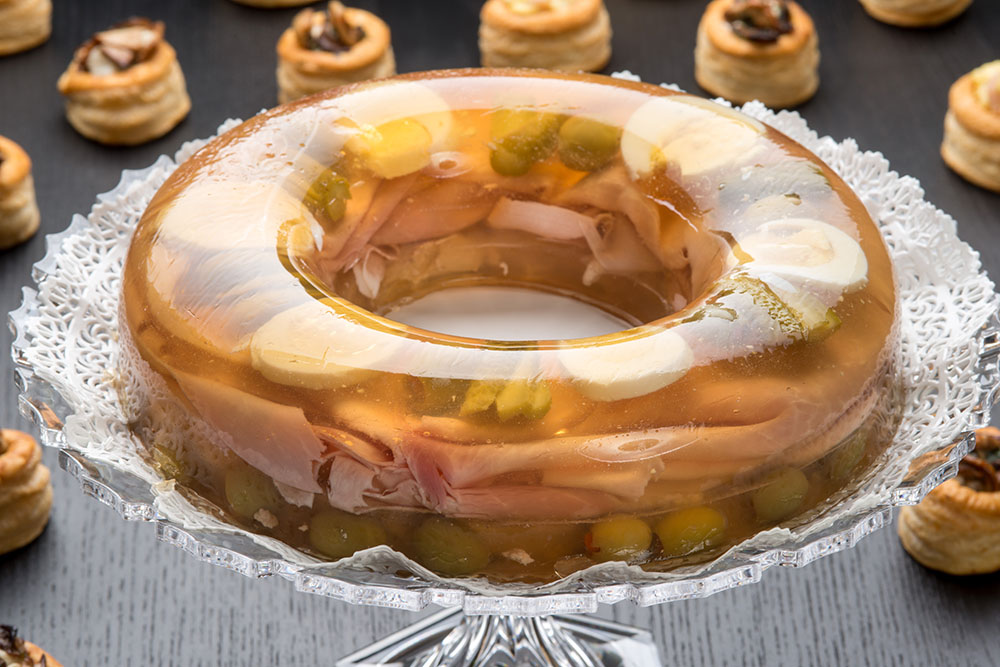
Galantina - Meat jelly.
Pastas de higado. A product made from finely ground or emulsified liver of pork, beef, goose or duck, mixed with pork or poultry fat and spices. Then they are placed in molds and slow- cooked in water or baked in oven.
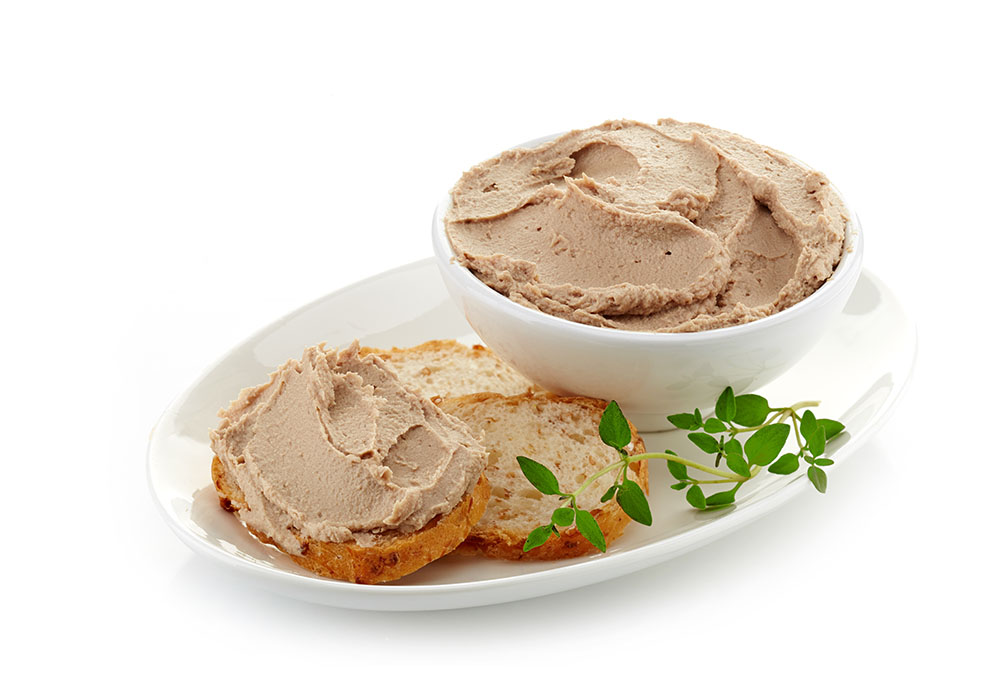
Liver paté.
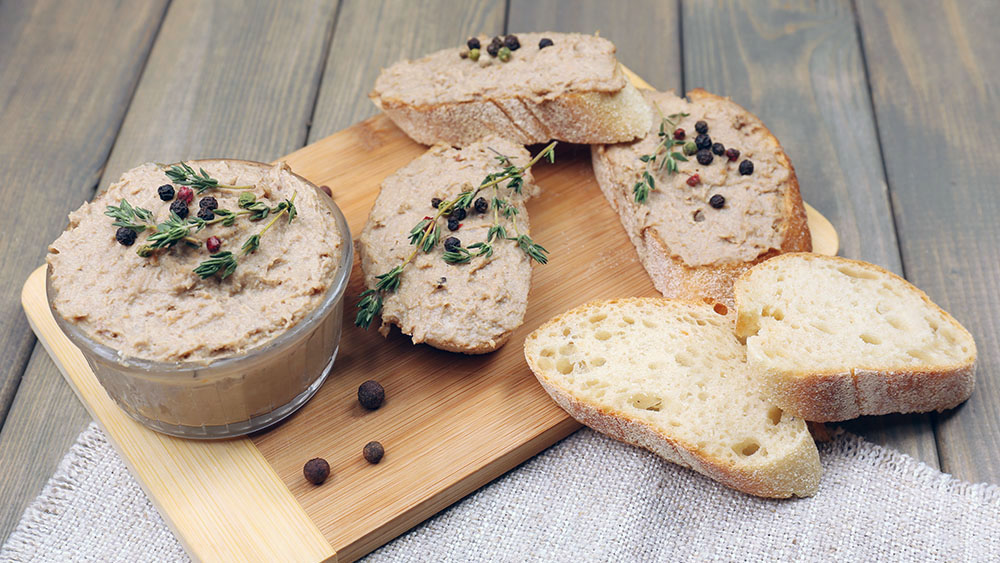
Liver paté.
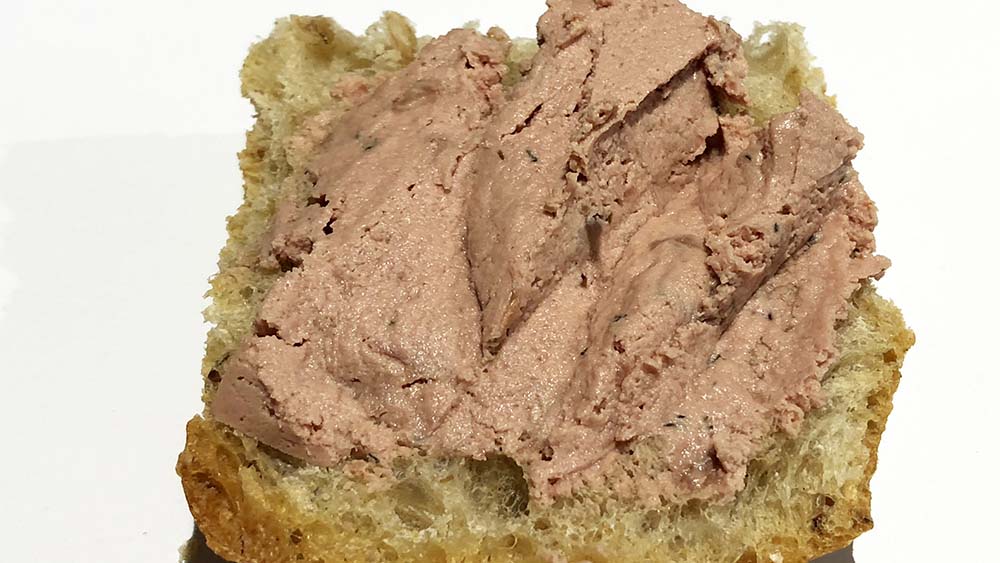
Liver paté on roll.
Chicharrones. A product made with pieces of pork skins, ears, dewlap and cracklings remaining from melting pork fat, also beef meat and tongue, bound together with gelatin and pressed and cooked in forming molds. Product has some rubbery texture and should not to be confused with pork chicharrones fried in oil.
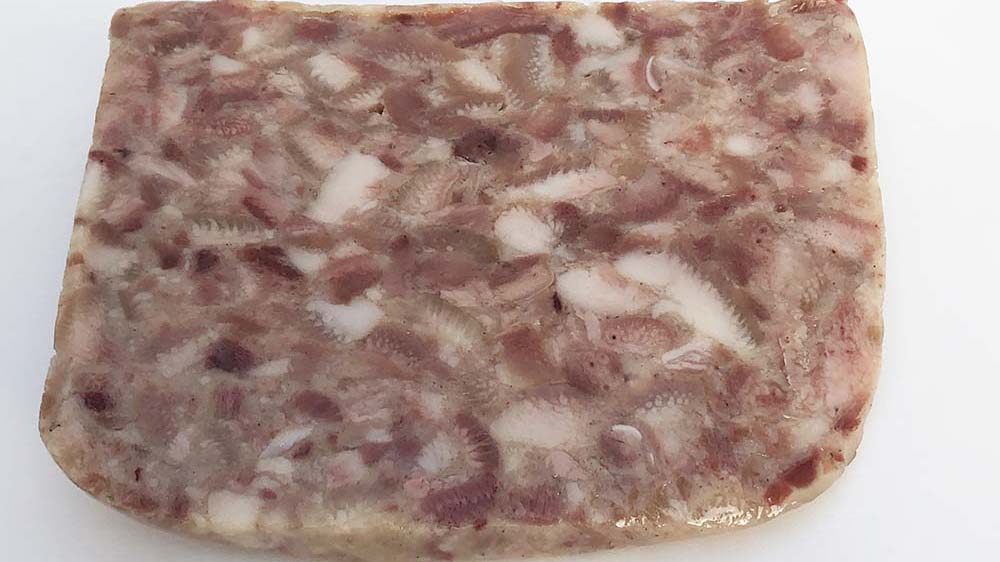
Chicharrones is a fiambre.
Queso de Cabeza and Galantina (Head Cheese and Meat Jelly)
Meat jellies and head cheeses are classified as fiambres and are quite similar, the main difference is that head cheese is stuffed in a large diameter casing (traditionally in pork stomach) and meat jelly is allowed to cool and set in a suitable mold or dish. Meat jelly contains much more aspic than head cheese and includes ingredients (olives, bell peppers, peas, carrots) that provide an attractive visual display. The meats are precooked, the mixture is stuffed in casings or packed in molds and cooked in water or baked in oven.
Queso de cabeza (queso means “cheese”, cabeza means “head”) is Spanish name for head cheese, known in English as brawn, souse or sulz. In Mexico it is known as queso de puerco, in Costa Rica, Peru and Bolivia as queso de chancho, in Argentina and Uruguay as queso de cerdo, and in Colombia as queso de cabeza. Head cheese is very popular in Chile where it is served with bread and pebre (mild sauce made from vinegar, garlic, parsley and pepper).
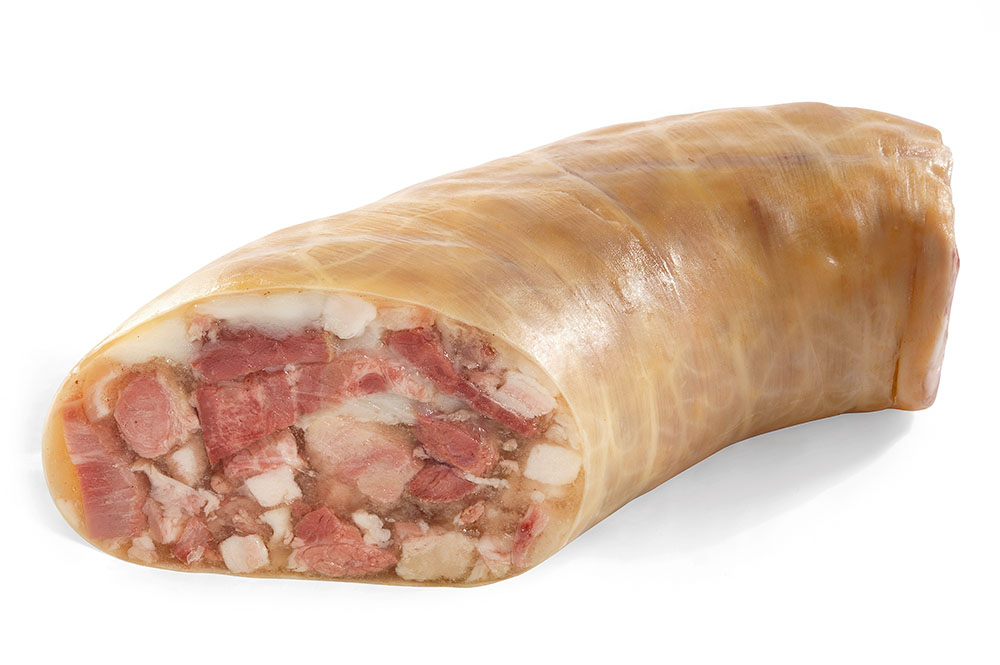
Queso de Cabeza - Head Cheese.
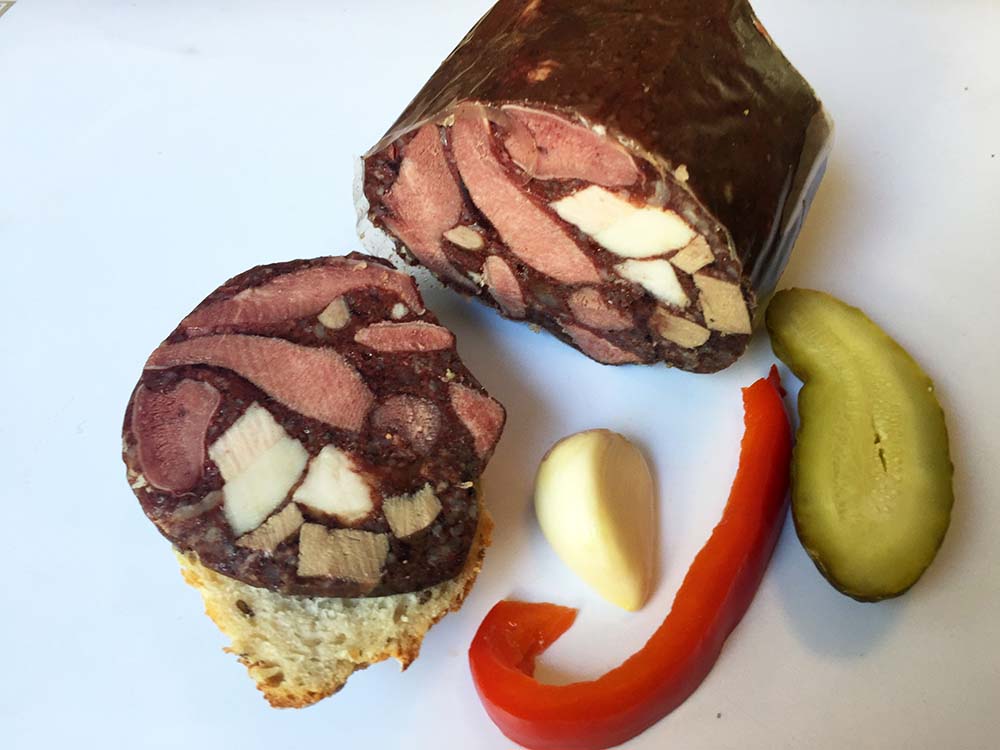
Tongue head cheese (fiambre).
Head cheese was traditionally made with pork head meat, however, it can be made with other meat cuts rich in collagen (connective tissue) as this is where the gelatin comes from. It will be unrealistic to expect that a person living in a large metropolitan city will be able to get a pork or wild boar head. What is needed is meat that is rich in connective tissue. Pig's hocks and feet are superb for producing gelatin and they taste great. Commercial gelatin is produced from skins so pork skins are usually added. The upper part of front leg, shoulder included, known as "picnic" is available in every supermarket and can be used for head cheese.
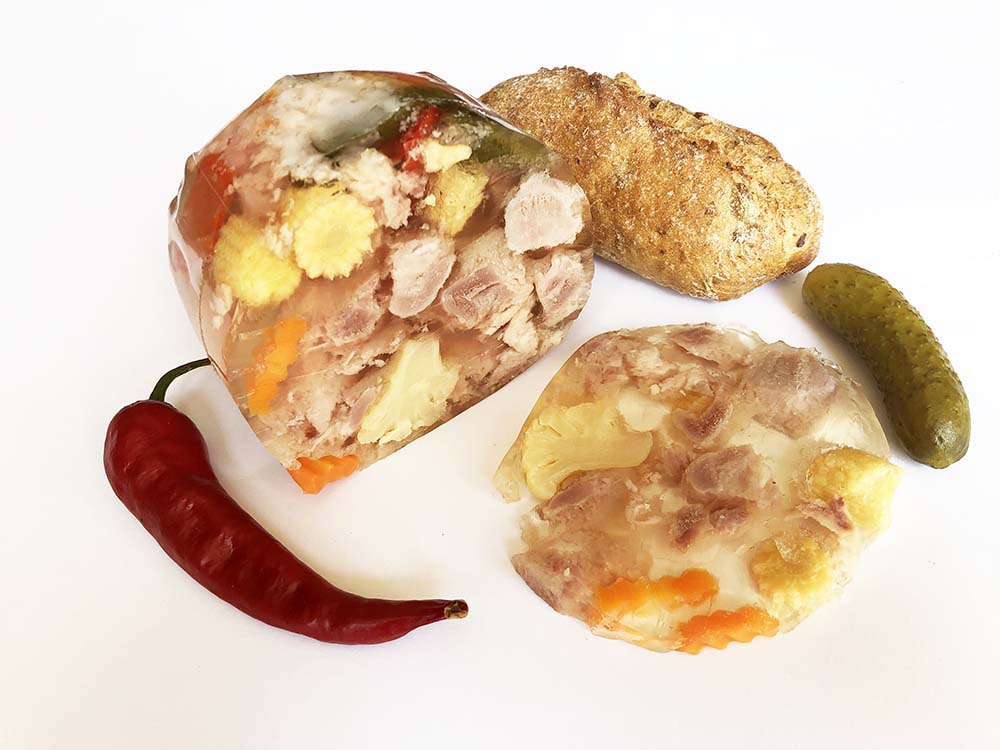
Meat jelly (galantina-fiambre).
Cabeza de Jabalí
Cabeza de Jabalí is a Spanish head cheese belonging to the "fiambre" group of meat products. Cabeza de Jabalí is listed in the Spanish Official Government Meat Standards Bulletin (Boletín Oficial del Estado, Real Decreto 474/2014, 13th June) as the product made from pork head meat. It is made from pork head meat, ears, snouts, lips, jowls, skins, tongue and is basically a head cheese (queso de cabeza). The Spanish word jabalí signifies in English "wild boar", so it may be assumed that wild boar head meat was used in the past, however, today, pork head meat is used. In Spanish supermarkets head cheese is listed as Cabeza de Jabalí.
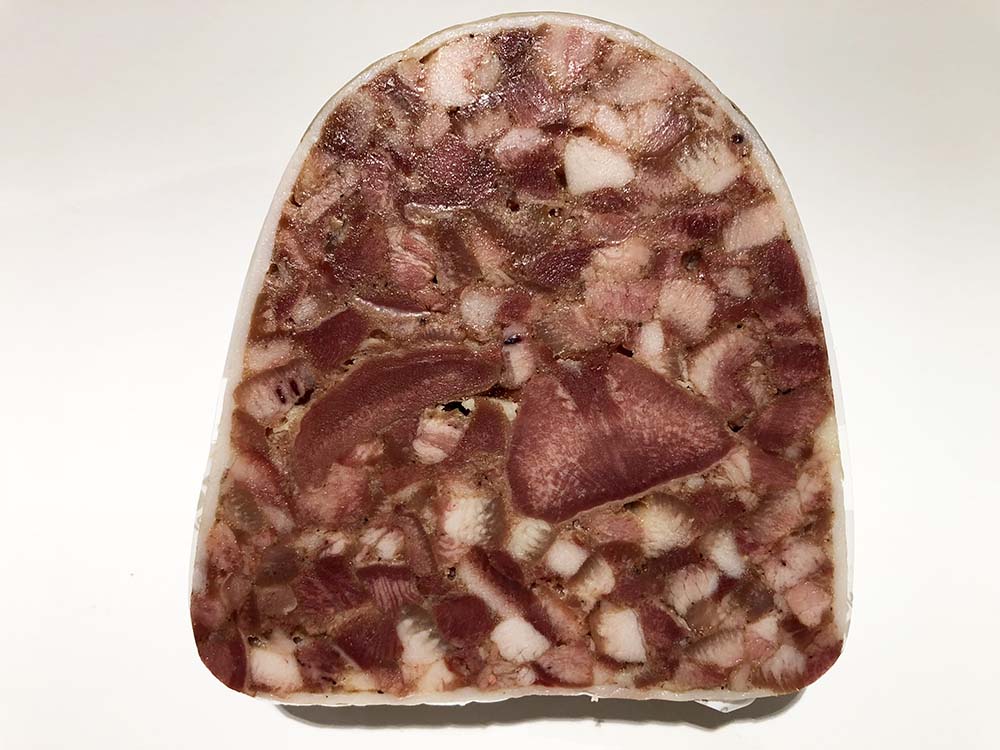
Cabeza de Jabalí.
Cabeza de Jabalí has a firm texture so there is not much gelatin. It has a pleasant taste and flavor.
Other Popular Spanish Sausages
These sausages belong to Sausages Made with Meat Category.
Androlla
Androlla is one of the most popular sausages in Galicia. Androlla is a smoked dry sausage very similar to Botelo. The main material in Androlla and in Botelo are ribs and skins but the sausages differ in size as Botelo is stuffed into blind caps, stomachs or bladders which are very large casings and Androlla is stuffed into pork bungs so it has a more uniform cylindrical shape. Androlla Gallega should consists of 90% ribs and 10% skins, Botello contains 70% ribs, skins and other meats.
Ribs are cut into pieces of length 3-4 cm, salt, skins are cut into strips, then mixed for 15 minutes with all ingredients (salt, sweet and hot pimenton, garlic, oregano). The mixture is left to stand for 12 hours at 20° C (68° F) and then is stuffed into large natural or artificial casings. about 6-8 cm in diameter and 15-25 cm in length. The sausages are usually smoked with oak wood during the first 8 days of production. Drying takes place at 12° C (53° F), 75% RH humidity for 15 days. Dry Androllas were dried for 1-2 months. Androlla is always cooked before consumption.
Cooking androlla (500 g/1 lb): place whole androlla in salted water and cook for 45 minutes. Add a large diced peeled raw potato, one quartered fresh cabbage and one salchicha type (any cooked type) sausage. Cover the pot and simmer for additional 30 minutes. Remove ingredients from the pot and serve hot on a plate.
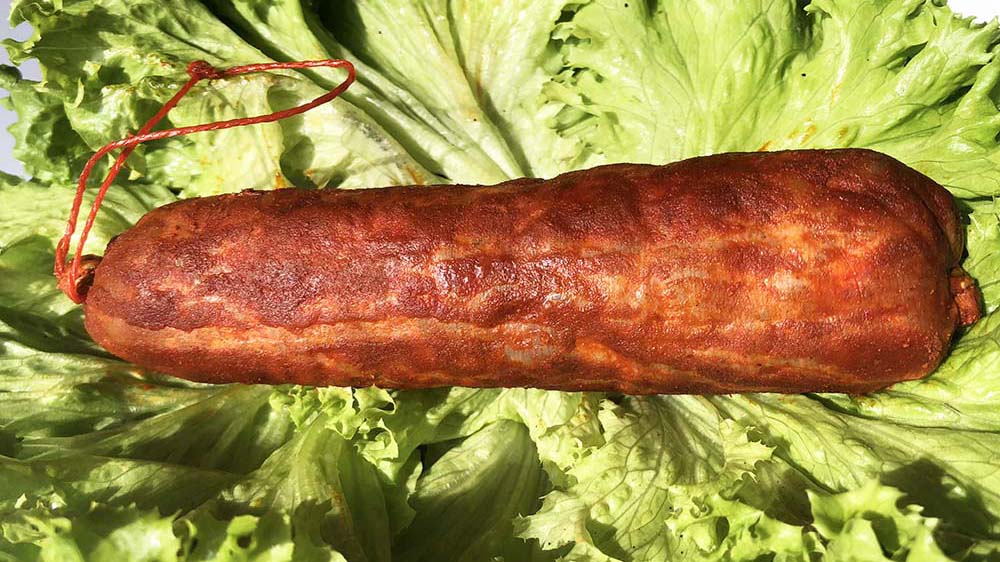
Androlla.
Botelo, Butelo or Botillo
A big fermented semi-dry sausage called in Galicia botelo or butelo, and in Castilla-León botillo. Botelo is similar to Androlla, but is a much thicker sausage owing its size to very large casings it is stuffed in.
A general recipe: ribs with attached meat (70%), spinal bones (vertebra) with attached meat (5%), lean pork (10%), cooked pork skins (7%), pork belly (5%), tail (2.5%), tongue (2.5%).
Meat is ground, ribs and other bones are cut into pieces ~ 4-8 cm length, salt, sweet and hot pimentΌn, garlic, and oregano are added and all ingredients are mixed for 15 minutes. The mixture is let to stand for 48 hours at 4-6° C (9-43° F) and then is stuffed by hand into pork blind caps (caecum), stomachs or bladders. The sausages are usually smoked with oak wood during the first 4 days of production. Drying takes place in storerooms at 10-12° C (50-53° F), 74-78% RH humidity for 15-20 days. Dry botelos were dried for 2-3 months.
Semi-dry botillo is always cooked before consumption. In order to remove bones easily from meat, botillo needs to be cooked from 180-240 minutes.
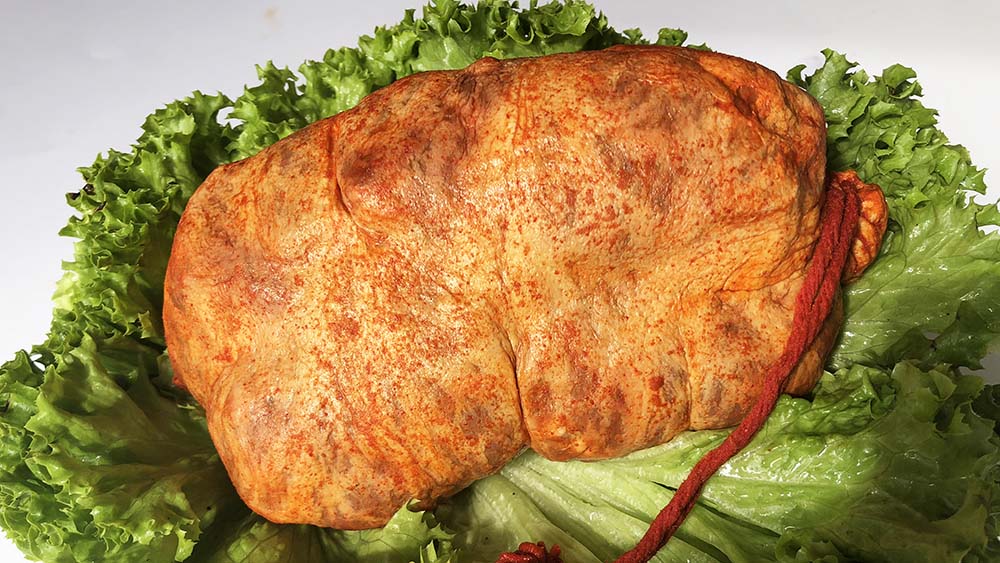
Botillo.
Botillo del Bierzo carries PGI (Protective Geographical Identification), 2001 classification. The El Bierzo region, made up of 38 municipalities located to the west of the province of Leon (Castile-Leon), Spain. The weight of Botillo del Bierzo averages 1 kg (2.2 lb).
Morcόn
Morcón is a high-quality chorizo like sausage which is fully cured and consumed raw. It follows processing steps for chorizo, but it is packed in pig blind cap (caecum), a large diameter intestine which is known in Spanish as “morcón”, hence the name for the sausage. The casing is reinforced lengthwise and across with butcher twine. The sausage is popular in the regions of Andalusia, Extremadura and the province of Salamanca in Castile and León. Those three regions form boundaries with one another. Most iberian pigs are raised in Andalusia and Extremadura, so morcόn produced in those provinces is made from iberian meat. Neck meat or upper shoulder (pork butt) is usually selected, the cut known as "cabacera de lomo" (loin head), although it has nothing to do with loin, except being in front of it. Secondly, loin is a lean piece, but pork butt contains about 25% of fat. However, the undeniable fact is that pork butt has a wonderful flavor and contains all classes of meat and fat.
There is also a well-known Morcón de Lorca from Murcia which is cooked and not dried. Morcón de Lorca breaks established rules for making morcόn as practiced in Extremadura, Castilla-León and Andalusia and is made with different cuts of meat, without pimentόn and is not dried but cooked.
Occasionally Morcon can be made with blood and it is then called Black Morcon (Morcón Negro).
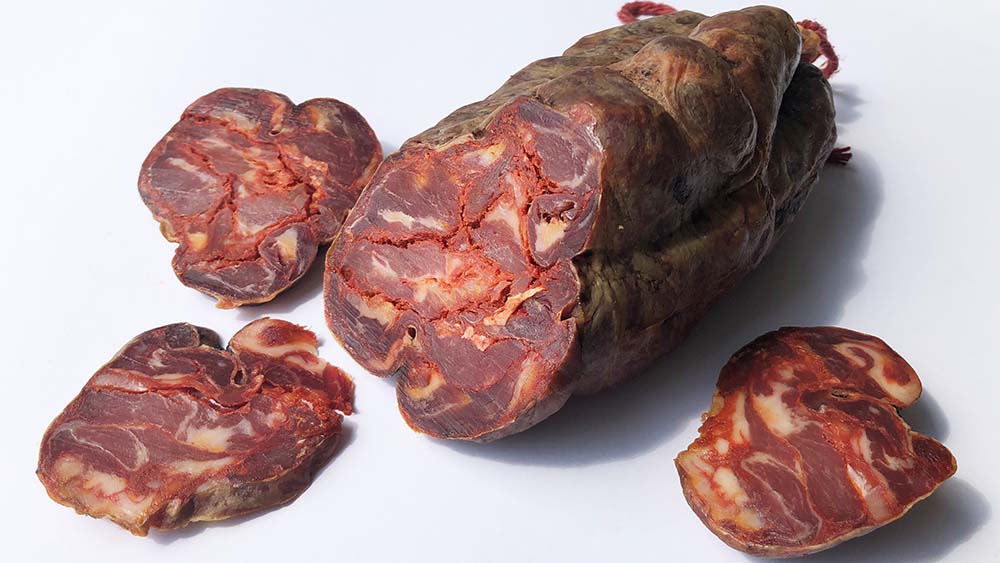
Morcón.
Chosco de Tineo is a type of morcón produced in Tineo municipality in the Asturías region in Spain. In 2011 Chosco de Tineo was granted PGI certificate (Protected Geographical Indication) which brought it the fame and recognition. Chosco de Tineo is made exclusively from cuts of pork shoulder/neck area known in Spanish as "cabecera de lomo" and tongue.